Dealers
  Sales portal
 A chisel plow is a tillage implement that uses a row of rigid or spring-mounted shanks, each fitted with a narrow shovel or point, to fracture and loosen soil to depths typically ranging from 6 to 12 inches. Unlike a moldboard plow, a chisel plow does not fully invert the soil profile. It lifts and shatters the tillage layer while leaving most crop residues near or on the surface. The result is a rough, cloddy finish that settles over winter or requires a secondary pass before planting.
What It Does to the Soil
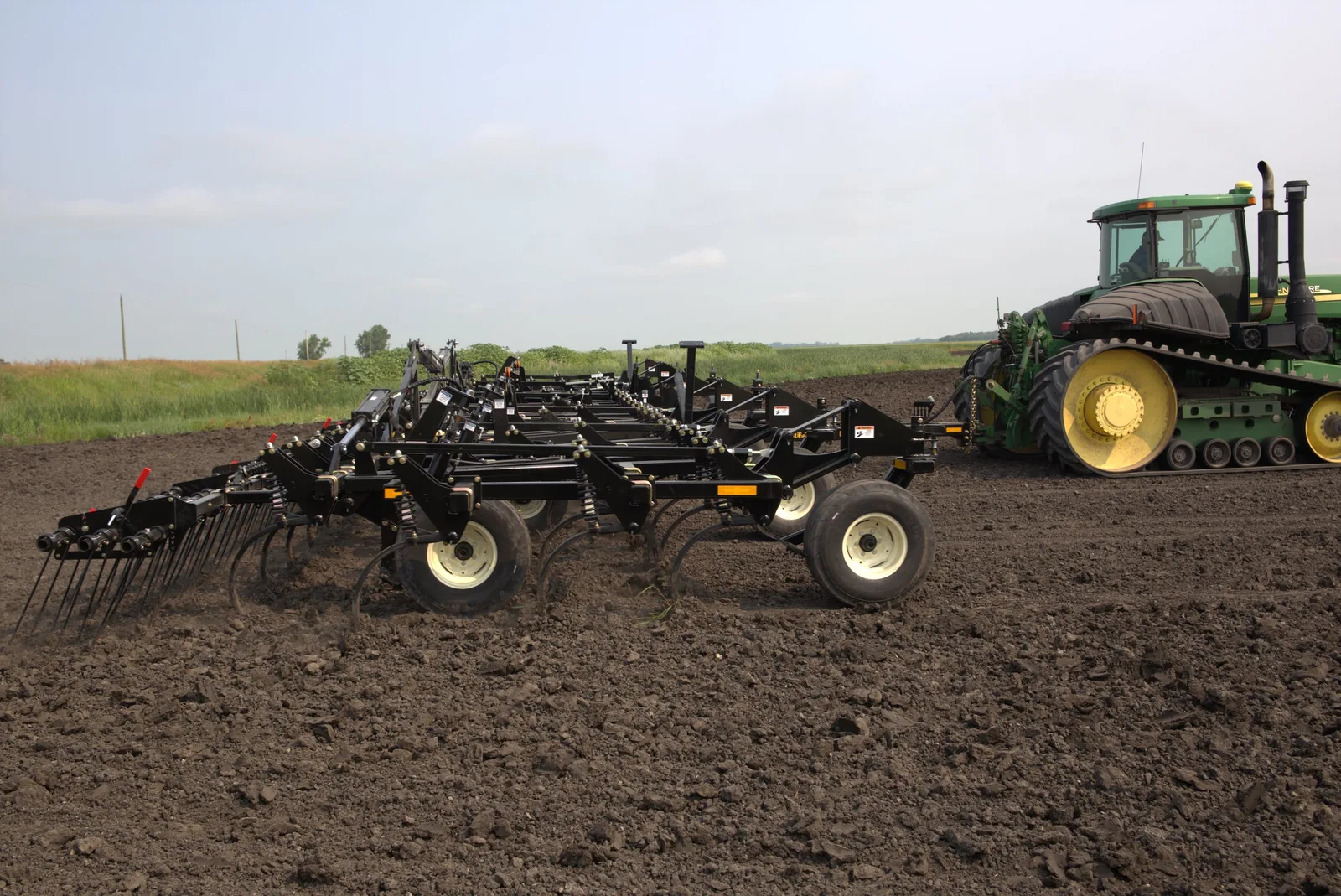
The shanks punch through hardpan and plow-sole layers, relieving soil compaction without burying the organic matter that feeds biological activity. Fracturing the lower tillage layer improves soil aeration, lets roots penetrate deeper, and opens channels for water infiltration. Residue left at the surface helps slow runoff and reduces the risk of soil erosion over fall and winter. Good soil structure is preserved in the upper profile because the plow disturbs rather than inverts.
Where It Fits in a Tillage Program
Chisel plowing is a primary tillage operation, typically run in fall after harvest. It suits fields coming out of row crops like corn or sunflowers where heavy equipment has created a compaction layer. Farmers using reduced tillage systems often rely on a chisel plow rather than a moldboard, since the surface residue supports better moisture retention heading into spring. A secondary tool, like a disc or harrow, handles final seedbed preparation. For operations moving toward no-till farming, a chisel pass every few years can address compaction without abandoning the system entirely. It also complements sustainable farming practices by keeping carbon-rich residue in the rooting zone.
A disc chisel is a related tool that combines coulter discs ahead of the shanks to slice residue before the points penetrate, which helps in heavy corn stalks or thick cover. For lighter disturbance across the full profile, vertical tillage is another option worth comparing.
Mandako Equipment for This Job
The Mandako Chisel Flex is Mandako’s purpose-built chisel plow, designed for Canadian field conditions and built to handle tough fall tillage. For operations that want to manage surface residue in the same pass or as a follow-up, the Mandako STORM vertical tillage tool and the Mandako Field Sergeant heavy harrow are practical companions for finishing a chisel-worked field before spring seeding.