Dealers
 Sales portal
Roller drum diameter
Roller drum diameter is the outside measurement across a land roller’s cylindrical drum, from one side to the other through the center. It determines how the drum rides over surface obstacles, how much ground contact area it carries and how effectively it presses stones, root balls and clods into the seedbed.
Why drum diameter matters in Prairie fields
A larger drum rolls over uneven ground with less tendency to dig in or skip across the tops of clods. On stony Black and Dark Brown soil zones, a small-diameter drum can deflect off a rock rather than press it down, leaving it proud of the surface. That matters at harvest: if the combine header has to run high to avoid rocks, lodged peas and lentils stay on the ground. The result is an even finish that supports good seed-to-soil contact and allows the cutter bar to run low come August.
How producers choose and use drum diameter
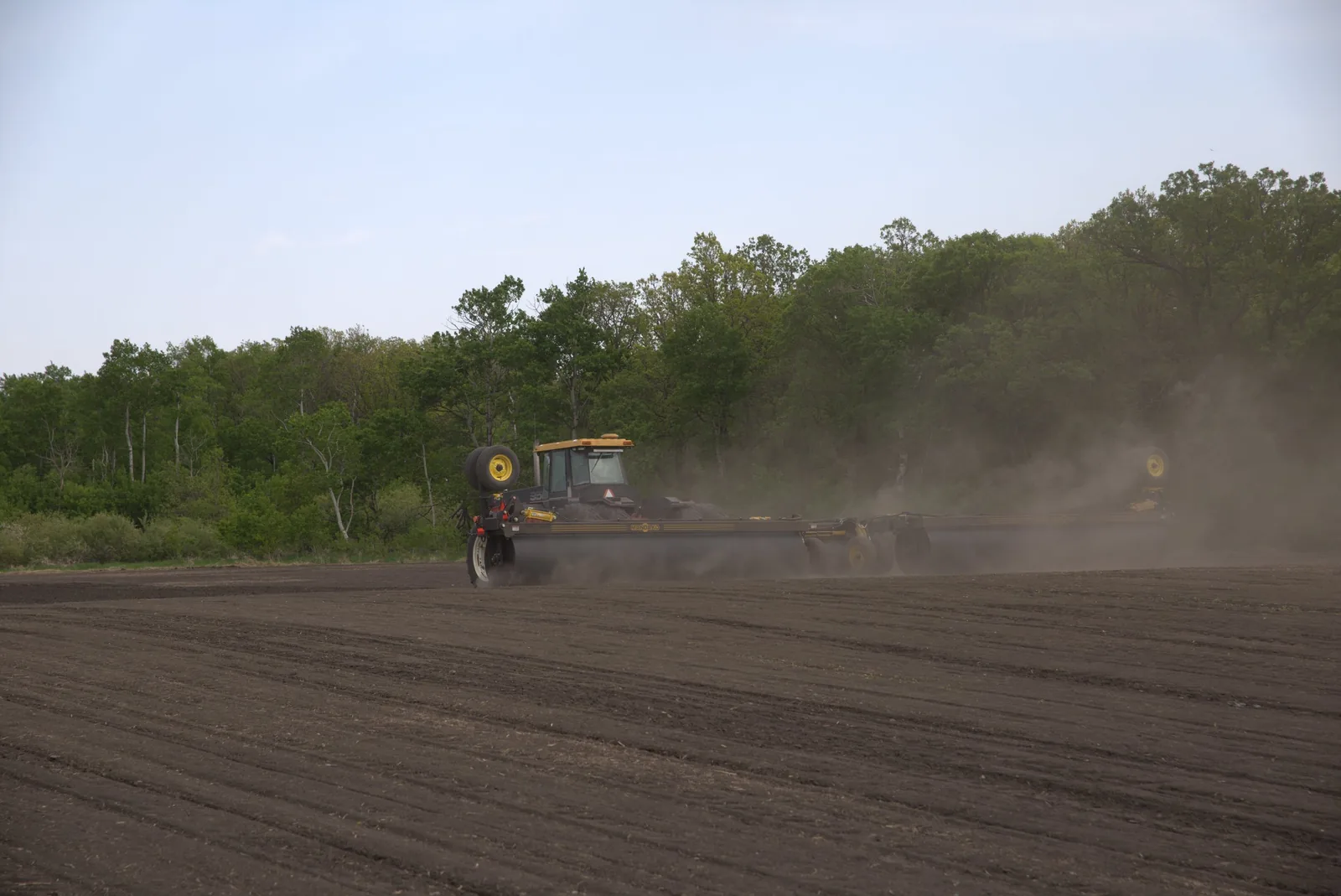
Most Prairie producers work with a standard 42-inch drum, which handles typical stony ground and the clods left after spring fieldwork. On particularly rocky ground, wall thickness becomes the second variable: a thicker wall adds weight per foot of width without changing the rolling footprint. Drums can also be filled with water when hard, dry soil needs more downward force to anchor stones. Timing matters as much as the hardware. For pulse crops like field peas and lentils, Saskatchewan Pulse Growers recommend rolling as soon after seeding as possible, pre-emergence, when the soil surface is dry but the ground underneath still holds some moisture. Post-emergence rolling of soybeans is done in the afternoon on a warm day, when plants are limp and less likely to snap. Rolling wet soil compacts and can seal the surface, so producers wait for the right conditions regardless of drum size.
Equipment that fits this job
The Mandako 3-Plex Landroller runs the standard 42-inch drum with a 5/8-inch wall, turning on a 3-inch shaft in heavy-duty bearings, and carries 465 to 530 lb per foot of width; a 42-inch by 3/4-inch drum is available for the rockiest ground, and every drum takes water ballast when you need more weight. The Mandako 5-Plex Landroller covers from 62 to 85 feet on the same 42-inch drum platform, with each drum tracking independently on a floating hitch. The Mandako 7-Plex Landroller reaches 112 ft, cutting the number of passes needed to cover large acreage; match drum diameter and wall thickness to your soil type before you start.