Dealers
 Sales portal
What Is a Tractor Roller?
Tractor roller is the common name for a land roller: a heavy steel drum, or a row of drums, pulled behind a tractor. It presses stones and root balls back into the ground and firms the soil surface.
Why it matters on the Prairies
Stones are a harvest problem. Rolling presses them down and levels the surface, so the combine header can run low without picking up rock. That is the main reason producers roll. It also leaves a firmer surface, which helps seed-to-soil contact.
Rolling does not raise yield by itself. Extension trials found no consistent difference in stand or yield. The payoff is a safer, easier harvest.
How producers handle it
Spring is the main season. Growers roll soybeans, field peas and lentils, either right after seeding or after emergence. Canola is rolled the same way on stony fields, but it is seeded shallow and crusts easily, so roll it only when the surface is dry and no heavy rain is forecast. Saskatchewan Pulse advises rolling pre-emergence as soon as possible, up to about two days after the drill goes through, when the soil is slightly moist but the surface is dry.
After emergence, every crop has a stage limit. For field peas, post-emergence rolling runs up to about the fifth node. Manitoba Pulse puts the safe soybean window at VC to V1.
Roll post-emergence crops in the afternoon of a warm day, when the crop is limp. In the morning, turgid stems snap. Skip wet soil, which compacts and crusts. Heavy rain right after rolling can also crust the surface, so avoid pre-emergence rolling when heavy rain is forecast.
A smooth, rolled surface is more prone to wind soil erosion. On dry, sandy or light soils, post-emergence rolling is preferred to reduce that risk.
Extension guidance is to use just enough weight to anchor the stones, since an empty drum means less compaction. Rolling is a surface job and does not fix deep compaction or drainage. For fields with serious rock, see our notes on rock rolling strategy for stony fields.
Equipment that fits
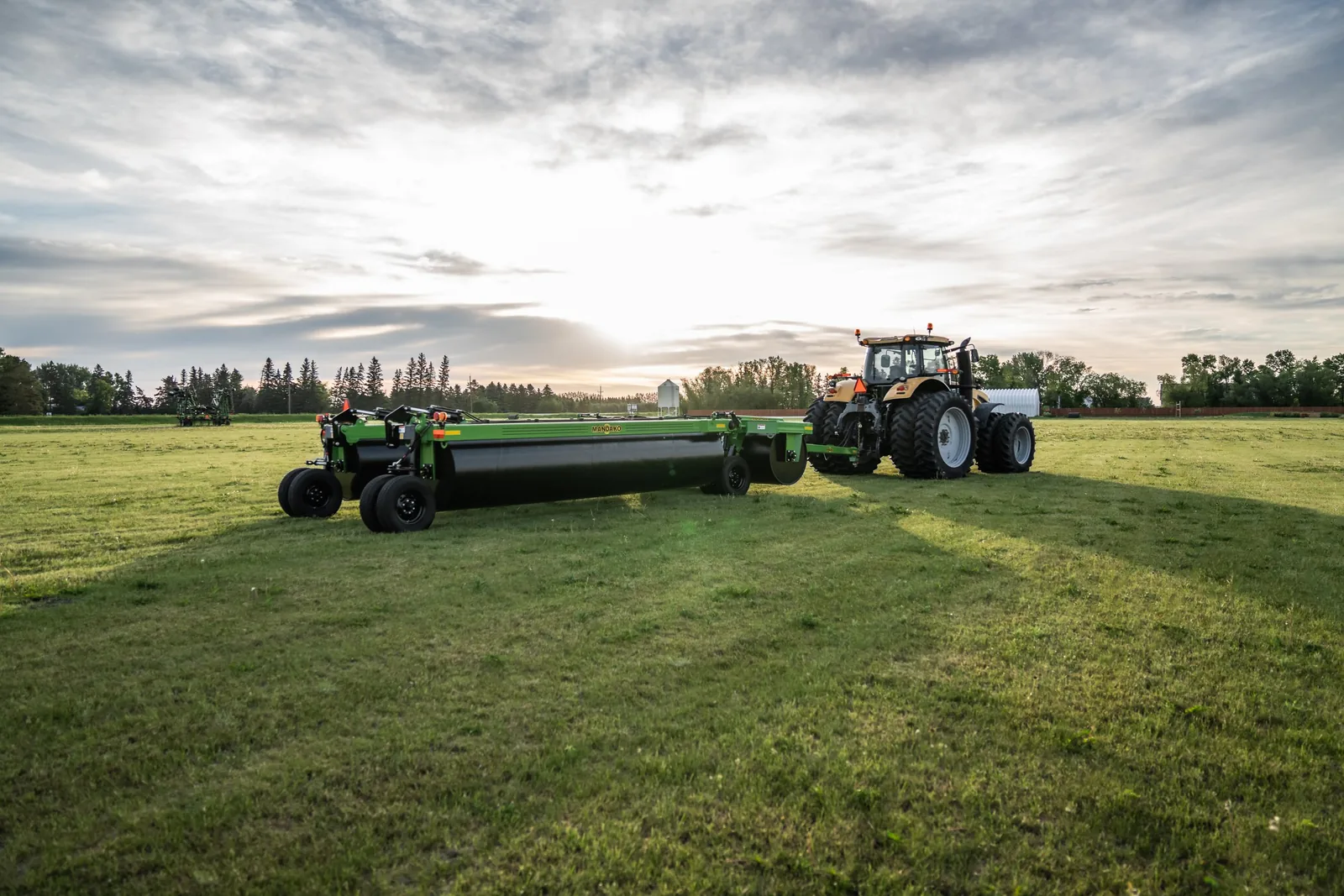
For wide acres, start with the Mandako 3-Plex Landroller. It is a three-section machine for tractors from 120+ HP on the smallest size. The standard drum is 42″ with a 5/8″ wall and carries 465 to 530 lb per foot, and every drum takes water for more weight. Before rolling a whole field of emerged crop, test a small area first and wait for a hotter day if you see damaged plants.