Dealers
 Sales portal
What is crop residue?
Crop residue is the straw, stalks, chaff and stubble left in the field after harvest. It protects the soil surface, but too much of it, or residue spread unevenly, causes trouble at seeding.
Why crop residue matters on the Prairies

Residue works for you and sometimes against you. Standing stubble traps snow and shelters the soil from wind. Manitoba Agriculture rates it at 1.6 times more effective than flat stubble for holding snow and controlling erosion.
The trouble shows up in spring. Heavy, unmanaged residue mats can slow soil warming, and a thick, uneven mat can plug seeder openers at seeding, which leaves you stopping to clear them instead of getting seed in the ground.
How producers handle crop residue
The first step happens at the combine. Chop and spread the straw well. A Saskatchewan study recommends harvesting on dry days, which suit even spreading.
Where residue is still heavy, producers size it with tillage in one of two windows: in the fall after a heavy canola or corn crop, or in spring before seeding. Tillage has a cost, though. Manitoba Agriculture figures one pass dries the soil by about 0.5 inch (12.7 mm) of water, and it flattens or buries the standing stubble that was holding snow.
A Saskatchewan flax-stubble study found wheat, pea and canola yields after vertical tillage were not significantly different from other residue treatments. Only run a pass if the residue is heavy enough to cause trouble at seeding. Our post on how residue holds moisture in dryland country covers the trade-off.
Equipment that fits
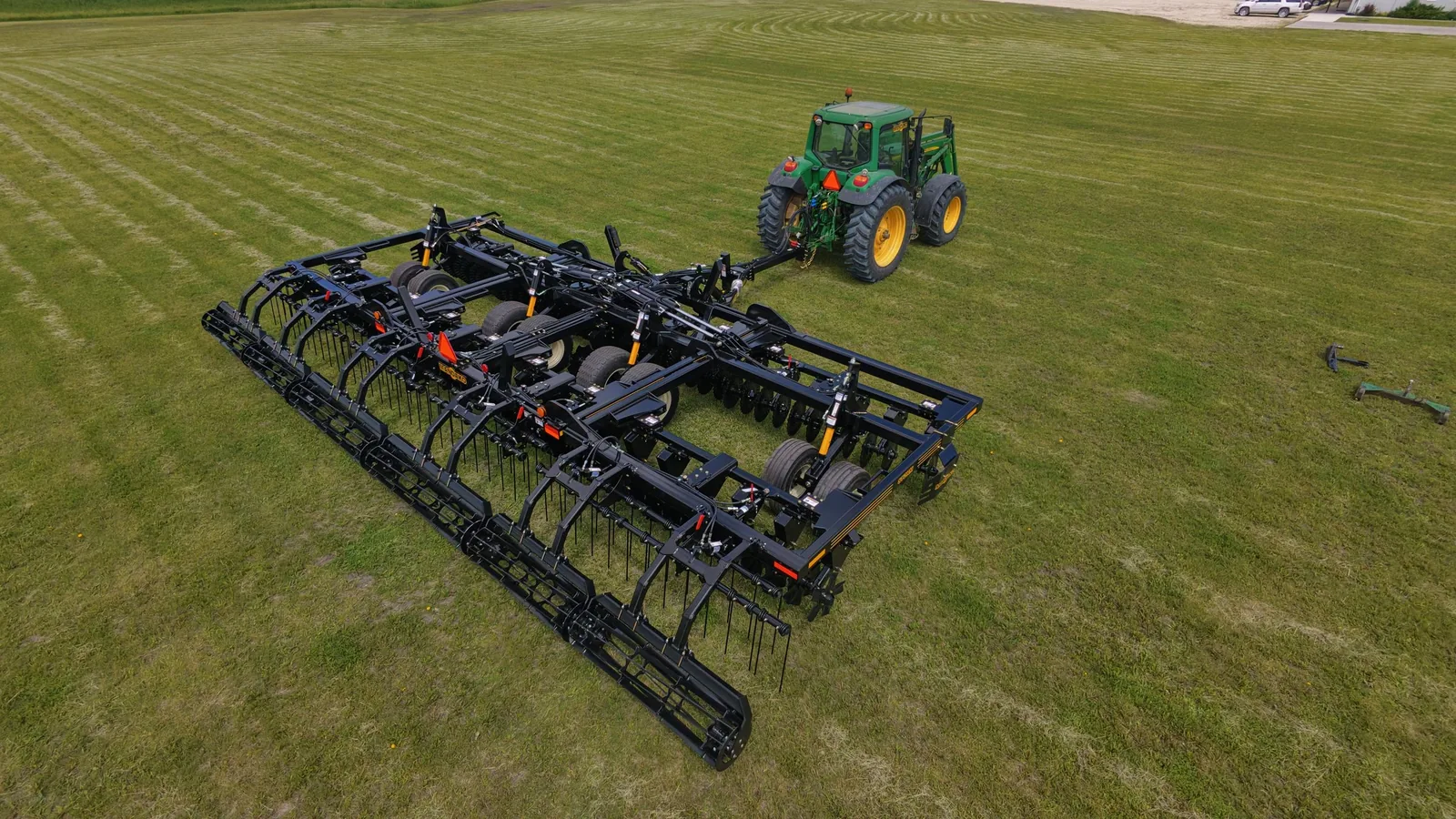
For sizing residue without turning the soil, the Mandako STORM fits this job. It runs 20-inch coulter blades on 10-inch spacing for a 5-inch effective cut, with blade depth from 1 to 6 inches. The toolbar angle adjusts hydraulically from 0° to 14° on the go. After canola or corn, open it up to mix residue and level ruts. In a wet spring, run it flat at 0° and wait until the field has dried before working it. Tilling soil near field capacity compacts it and leaves clods that hurt seeding depth, whatever tool you use.