Dealers
  Sales portal
Getting Corn Residue Right Before the Snow Falls
The combine has rolled through, the grain cart is done its last run, and you're looking back at a field…
Read More →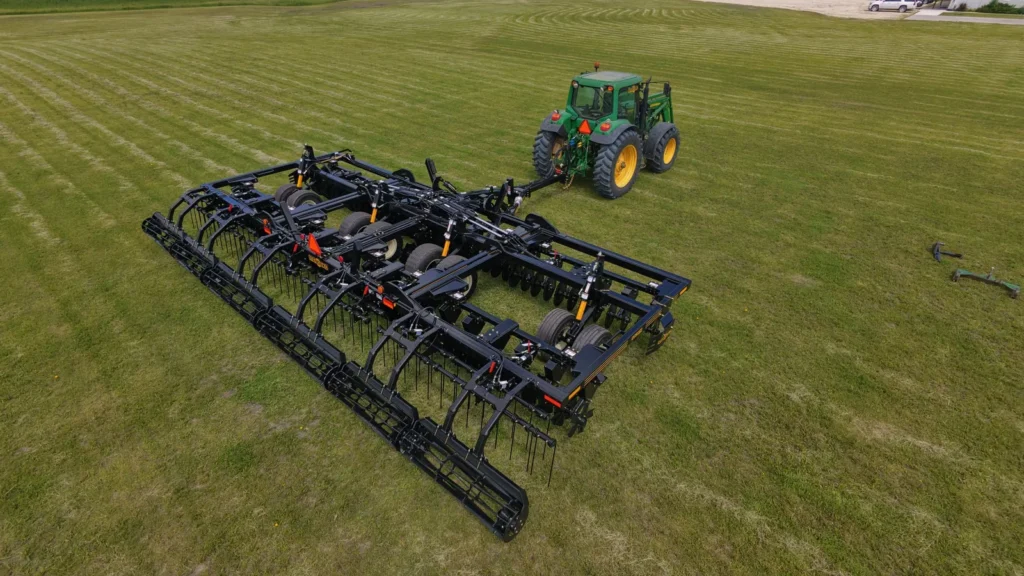
Ask any producer farming near Shaunavon, Saskatchewan, or across the driest stretches of the Northern Great Plains, and they’ll tell you the same thing: you’re never more than a week of hot wind away from a moisture crisis. Annual rainfall totals that look reasonable on paper can disappear fast once you factor in evaporation, wind, and a crop that’s drawing hard on whatever the soil stored over winter.
In that environment, every management decision either helps you hold water or costs you water. Residue is one of the biggest levers you have.
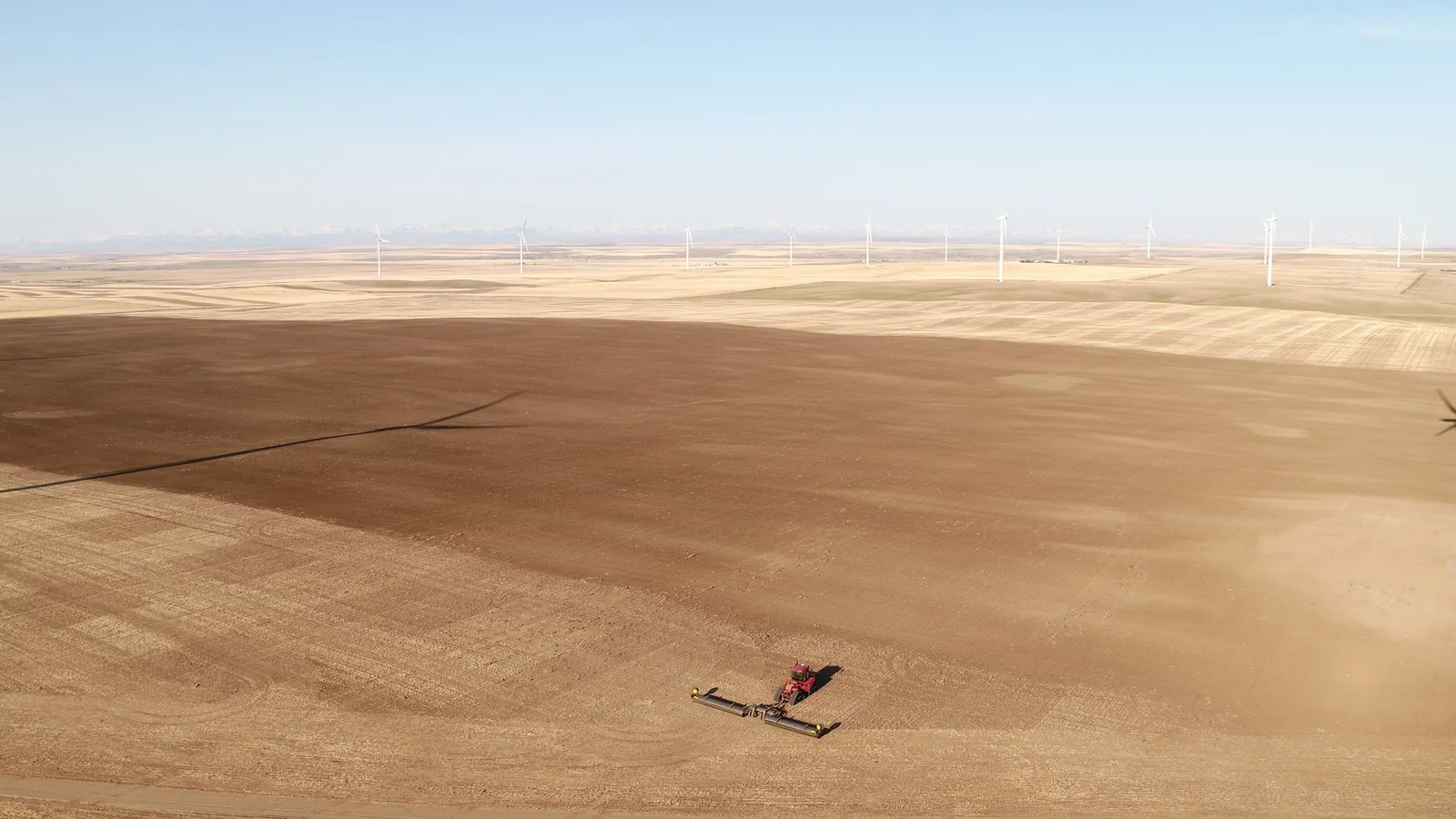
Crop residue does two things that matter most in dryland country. First, it slows evaporation. Bare soil bakes and loses surface moisture fast. A layer of straw or chaff keeps the sun and wind off the ground and can meaningfully reduce evaporative loss during a dry stretch. Second, residue traps snow. On the Prairies, a good snow catch can be the difference between a workable subsoil moisture profile in May and planting into dust.
The challenge is that heavy residue, particularly from high-yielding cereals or coarse-stalked crops like corn or sunflowers, can create real problems at seeding. Thick, uneven mats of straw plug openers, cause hair-pinning, and leave seeds sitting in air pockets instead of making firm contact with moist soil. That tradeoff sits at the center of every residue management decision in a low-rainfall system.
Aggressive tillage after harvest feels like progress. The field looks worked and ready. But in dryland conditions, tillage often does more harm than good. Turning soil breaks up aggregates, destroys the capillary channels that move water upward from depth, and leaves the surface exposed to wind erosion. Producers who have shifted toward no-till or conservation tillage in the Brown and Dark Brown soil zones often report better subsoil moisture retention over time, even if the transition takes a few years to get right.
The goal is to manage what’s on top of the soil without wrecking what’s underneath it. That’s a harder line to walk than it sounds, especially when you’ve got four inches of tangled wheat straw sitting on an otherwise clean seedbed.
Two implements tend to come up repeatedly when dryland producers talk about post-harvest residue work: vertical tillage tools and land rollers.
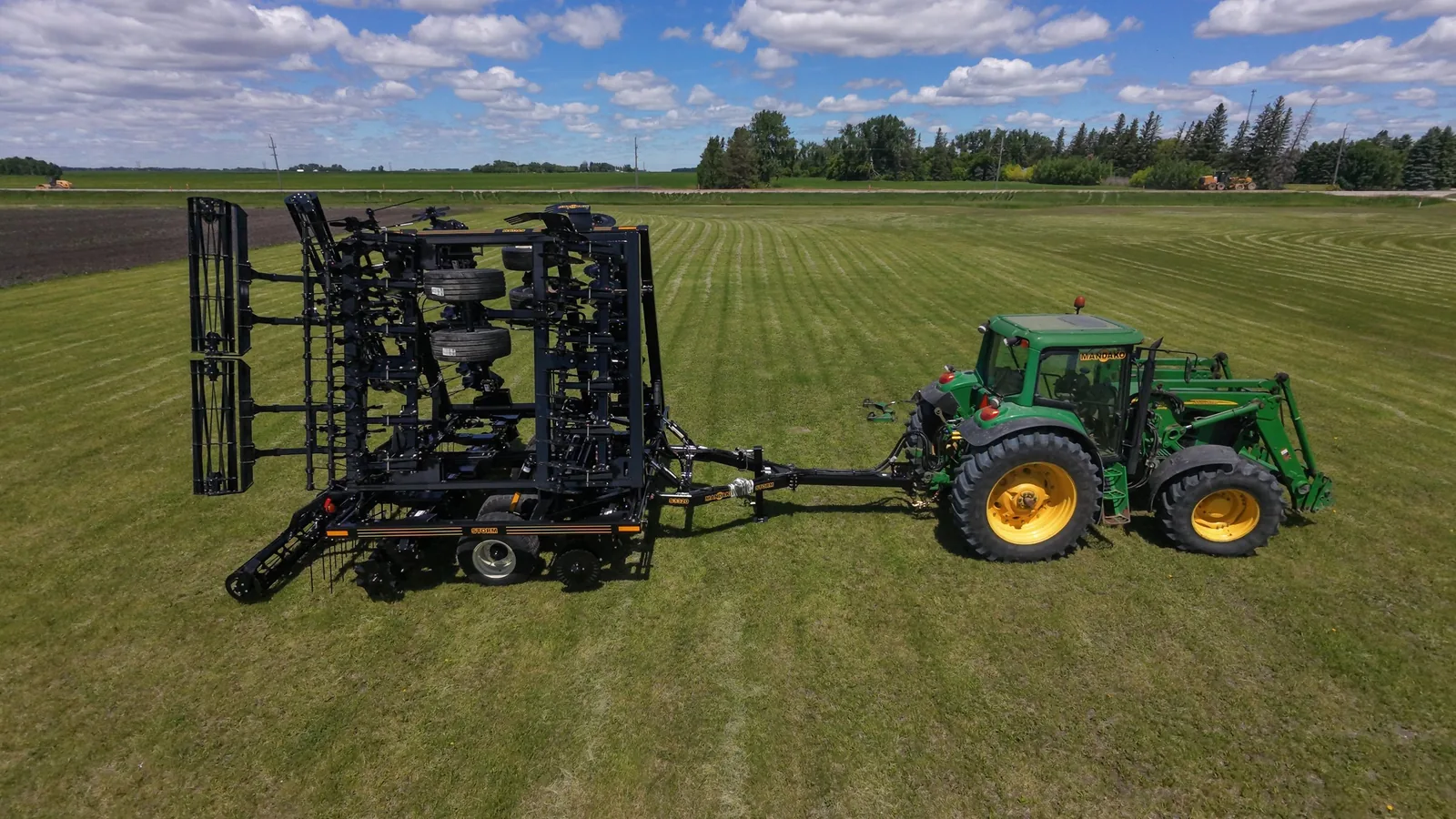
Vertical tillage cuts and sizes residue without inverting the soil layer. The blades run nearly straight and move through the soil vertically, which means you get residue sizing and some incorporation without the moisture-robbing effect of a disc harrow or moldboard. The surface stays rough enough to catch snow and resist wind, but the residue is broken up enough to feed through a seeder the following spring.
In dryland conditions, the key is running shallow. You want to touch the residue, not the soil profile. Depth discipline is what separates a useful fall pass from one that costs you moisture.
The Mandako STORM is one vertical tillage tool built around that low-disturbance idea.
A land roller takes a different approach. Rather than cutting residue, it presses it flat and firms the soil surface. In a dry fall, this can be done right after harvest to push anchored stubble into better contact with the ground. Rolling also buries small stones and smooths the surface for the next crop’s seeder, which can reduce opener wear and improve seed-to-soil contact in the spring.
Some dryland producers pair a land roller with careful combine settings, letting the machine spread residue evenly behind the header and then pressing it down in a single post-harvest pass. Fewer field passes means less compaction risk and less fuel burned. When margins are thin, that adds up.

No amount of post-harvest fieldwork fully compensates for poor residue distribution off the combine. A spreader that’s throwing straw to one side, or a chopper that’s leaving whole stalks, creates problems that are hard to fix later. In dryland country especially, it pays to check spread width and chaff distribution regularly during harvest. The goal is even coverage across the full header. Uneven residue means uneven seeding conditions the following spring, and in a year when moisture is already short, uneven emergence can cost you yield.
Managing moisture retention through residue, soil structure, and careful equipment choices has a proven track record on the Prairies. Producers who stay with it long enough tend to see the payoff show up in their moisture profiles come spring, especially after a dry fall or a winter with spotty snowfall. Check your spread pattern at harvest, run the fall pass shallow or skip it, and let the cover do its work.
Meet our team at an upcoming event and get a hands-on look at Mandako's latest tillage solutions.
The combine has rolled through, the grain cart is done its last run, and you're looking back at a field…
Read More →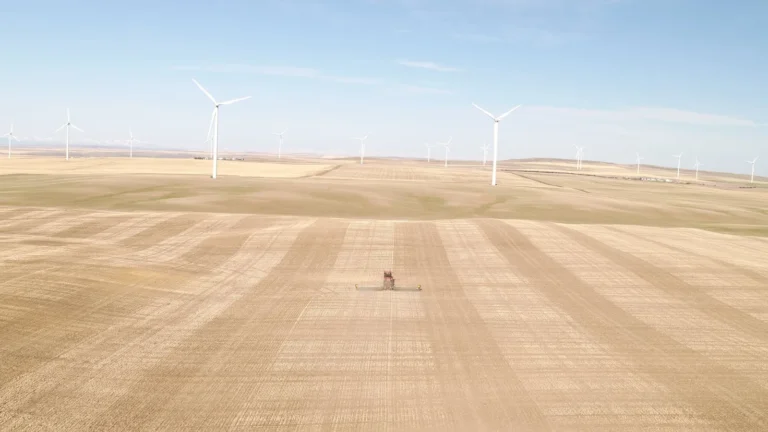
The combine is parked, the bins are full, and yields came in better than most growers expected after a wet,…
Read More →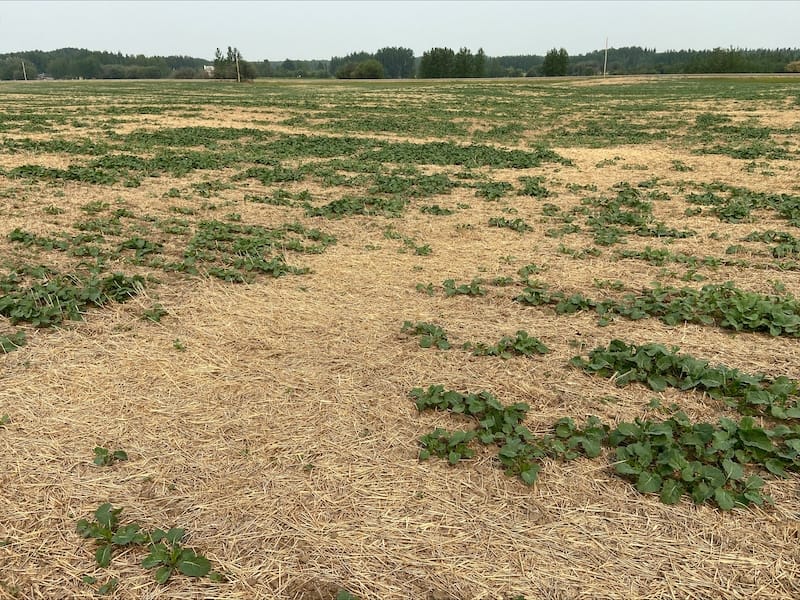
No-till built your soil. Now it may be hiding nutrients from your crop. Direct seeding has done a lot of…
Read More →