Dealers
  Sales portal
 Conservation tillage is any tillage and planting system that leaves at least 30 percent of the soil surface covered by crop residues after planting. The primary goal is to reduce soil erosion from wind and water, while also improving moisture retention and protecting long-term soil health. It is an umbrella term that covers several approaches, ranging from no-till farming at one end to reduced tillage and vertical tillage in the middle.
What It Involves
Conservation tillage limits the number of passes across a field and the depth and aggressiveness of any soil disturbance. Where conventional moldboard plowing inverts and buries residue, conservation tillage methods size, anchor, or leave residue on the surface. Tools used within conservation tillage systems include chisel plows, vertical-tillage implements, and strip-till setups. The key measure is residue coverage after planting, not the specific tool used to get there. Farmers also pair this approach with cover crops and planned crop rotation to keep the soil surface protected year-round.
Why It Matters on the Farm
Residue on the surface acts like a blanket. It slows runoff, holds snow, and cuts evaporation during dry stretches. Fields managed under conservation tillage tend to show better soil structure over time because fewer passes mean less soil compaction and more intact pore space for roots and water. Fuel and labor costs drop when you pull two passes out of the rotation. On the Prairies, where spring moisture is often the limiting factor, that residue cover can be the difference between a decent stand and a replant.
Fitting It Into Your Cropping System
Conservation tillage is not a one-size approach. Heavy residue from corn or canola may need sizing before spring to improve seedbed preparation and controlled traffic planning can reduce compaction further. It fits well within broader sustainable farming practices and is compatible with both conventional and organic farming systems. The right balance depends on your soil type, crop sequence, and equipment. A clay-heavy field in a wet year needs a different approach than light loam in a dry one. Start with your erosion risk, your moisture situation, and work backward from there.
Mandako Equipment for Conservation Tillage
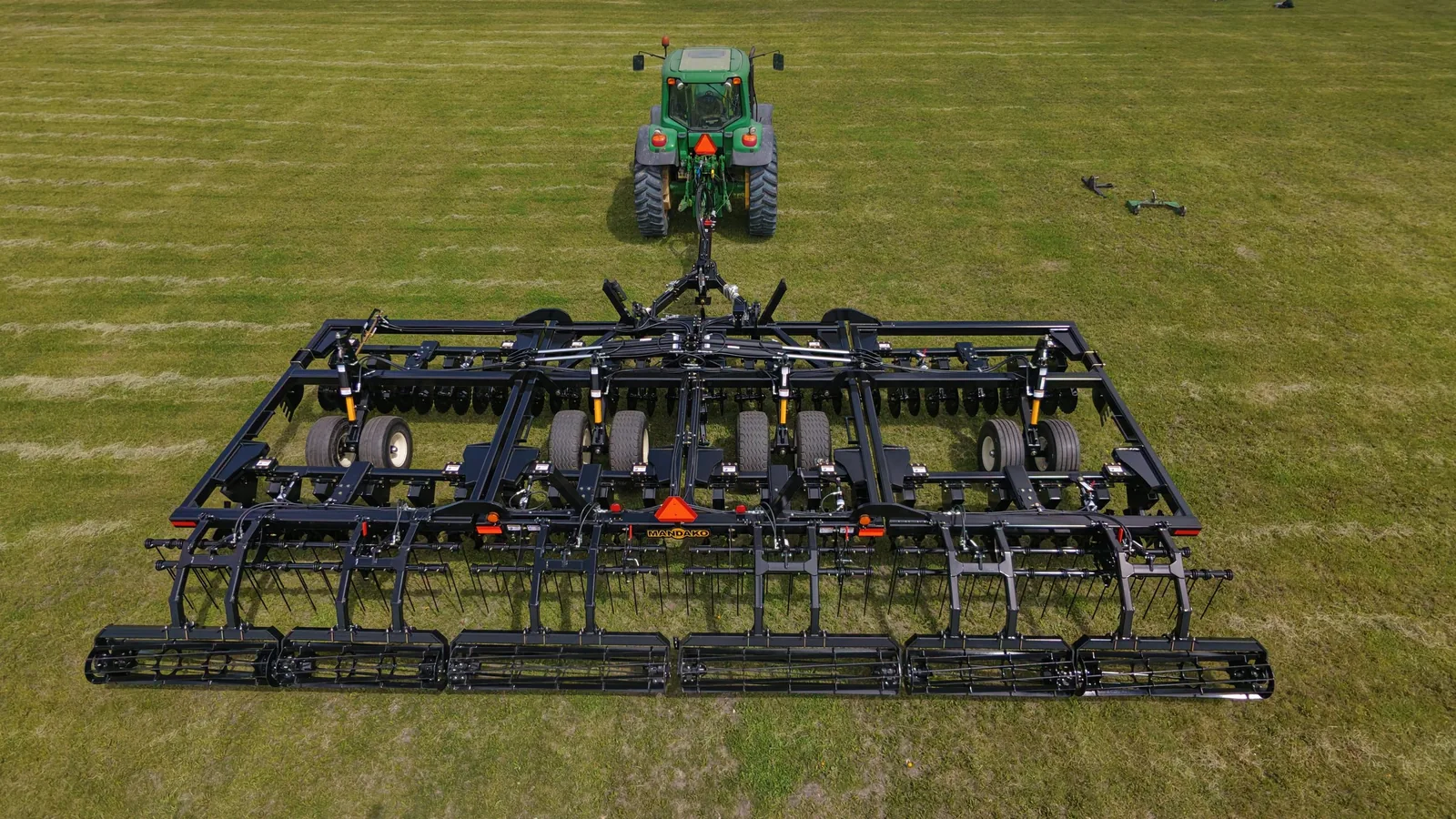
Several Mandako tools are well-suited for producers managing residue without burying it. The Mandako STORM is a vertical-tillage implement designed to size and incorporate residue while leaving the soil largely undisturbed. The Mandako Chisel Flex lets you work deeper when compaction needs addressing, without the full inversion of a moldboard. For operations using cover crops as part of their conservation system, the Cover Crop Crimper terminates standing cover crops and lays them flat, creating a mulch layer that protects the surface through planting.
Browse the full Mandako AgriPedia for related tillage and soil management terms.