Dealers
 Sales portal
Rolling land is the practice of pulling a drum roller across a field to press stones and root balls into the soil and firm the surface. It is done in spring, most often right after seeding or within a short window after emergence, to set the field up for a cleaner, safer harvest.
Why rolling matters on the Prairies
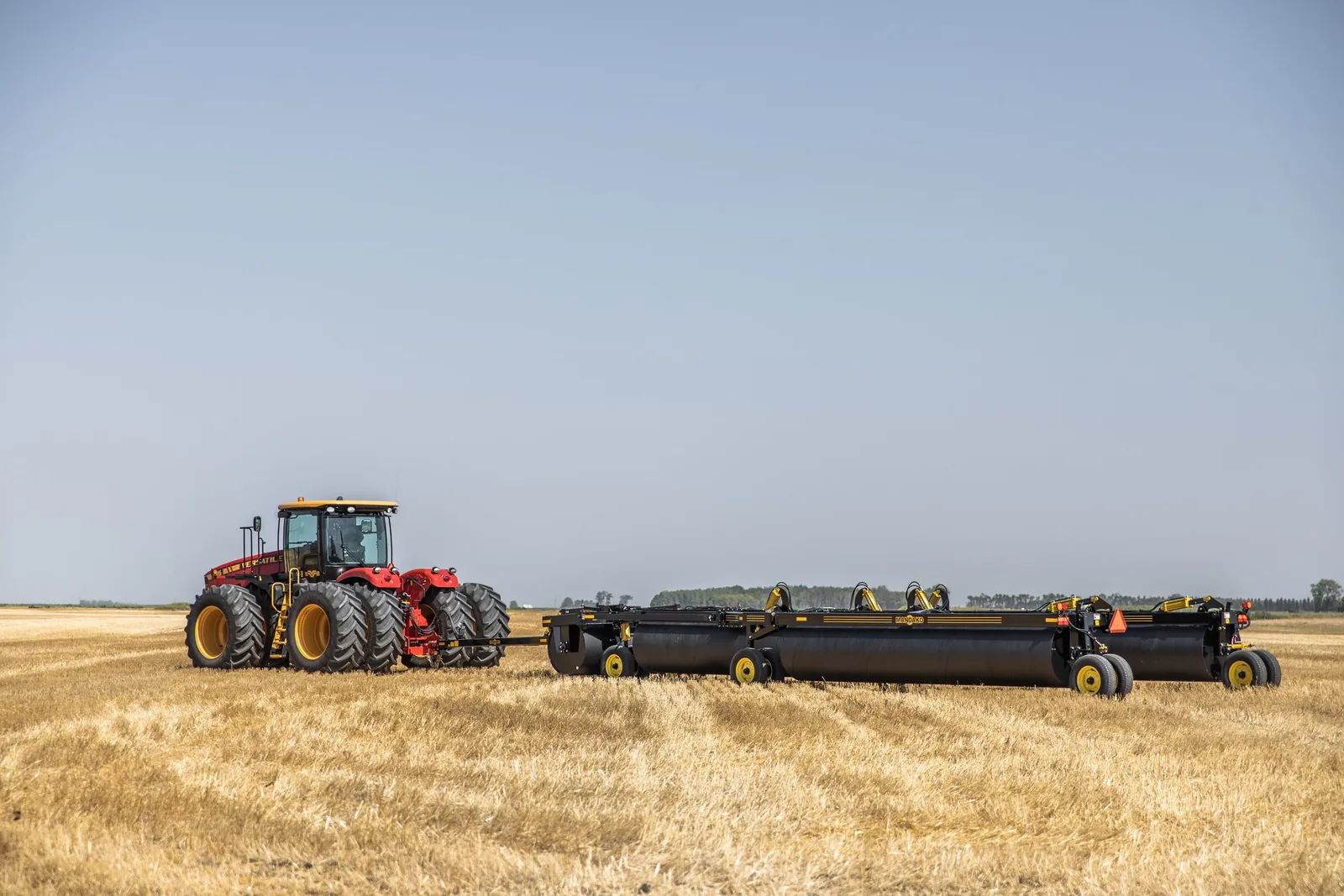
The payoff shows up in the fall, not the spring. A stone sitting a few inches above grade in May is a stone the combine hits in September. When rocks and root balls are pressed flush with the surface, the header runs low, the cutterbar stays intact, and the operator is not resetting shear bolts all day. A firm, level surface also gives each seed good seed-to-soil contact and a consistent emergence chance.
On light soils in Brown and Dark Brown zones, a smooth, bare surface can move in the wind after rolling. Saskatchewan Pulse notes that on dry or sandy ground, post-emergence rolling is preferred over pre-emergence rolling to leave some surface roughness in place while the crop is establishing.
When and how producers roll
Spring is the main season. Most rolling on the Prairies targets pulse crops, canola and cereals, either right after planting or during a short post-emergence window. Saskatchewan Pulse recommends rolling field peas from pre-emergence up to about the fifth node, and lentils from pre-emergence up to the five to seven node point. Manitoba Pulse sets the safe post-emergence window for soybeans at VC to V1, the first trifoliate stage.
Timing within the day matters. Post-emergence rolling is done in the afternoon of a warm day, around the threshold Manitoba Pulse puts at about 25°C or warmer, when plants are slightly wilted and flexible. Turgid morning crops snap instead of bend. Wet soil is a hard stop: rolling saturated ground compacts the surface, can seal it into a crust, and raises root rot risk. Leave three to four days between rolling and a herbicide pass, per Saskatchewan Pulse guidance.
Equipment that fits
The Mandako 5-Plex Landroller suits large Prairie operations, carrying 487 to 556 lb per foot of width on its 42-inch, 0.625-inch-wall drums, with every drum fillable for extra weight on hard ground and sections overlapping two to three inches so no strip is left standing. Mid-sized operations are a better fit for the Mandako 3-Plex Landroller. Operations needing maximum width can step up to the Mandako 7-Plex Landroller, which scales to 112 feet. Check the horsepower table on the product page and confirm your tractor meets the rating for the width you are buying.