Dealers
 Sales portal
What is soybean residue?
Soybean residue is the stubble, stems and pod trash left on the field after the combine has passed. It is a type of crop residues on the Prairies, and most of it stays on the soil surface through winter.
Why soybean residue matters on the Prairies
Soybean trash left in heavy, unmanaged mats can slow soil warming in spring and plug seeder openers.
Manitoba Pulse and Soybean Growers trials found that soil temperature and moisture at emergence did not differ between residue treatments, and test-crop yields did not differ in 4 of 5 experiments.
How producers handle soybean residue
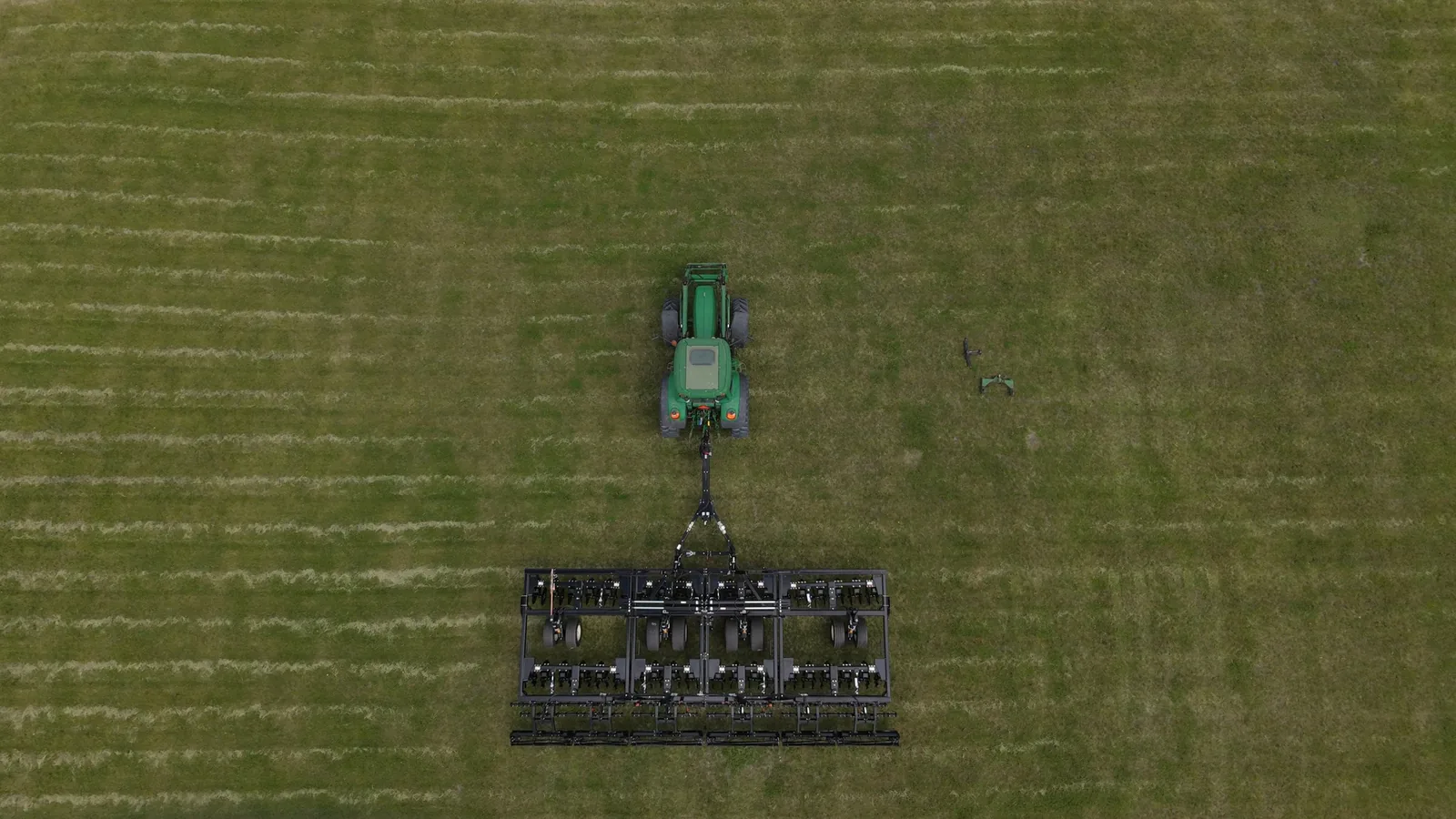
The first step happens at the combine. Even spreading starts with good chopping and harvesting on dry days that suit it. Standing stubble is also worth keeping where you can. Manitoba Agriculture puts it at 1.6 times more effective than flat stubble for both wind erosion control and snow trapping, and tillage flattens or buries it.
When a field needs more, producers use vertical tillage in one of two windows: fall, after a heavy crop like canola or corn, or to level harvest ruts before freeze-up, and spring, before seeding. Every pass costs moisture. Manitoba Agriculture puts one pass at about 0.5 inch (12.7 mm) of soil water, and tilling wet ground causes compaction and clods that hurt seeding depth. In Manitoba Pulse trials, a high-disturbance pass with discs at 6° cut ground cover to about 21%, against 71% in no-till. Low-disturbance passes in the same trials ran at 0°. The full approach is covered under crop residue management.
Equipment that fits soybean residue
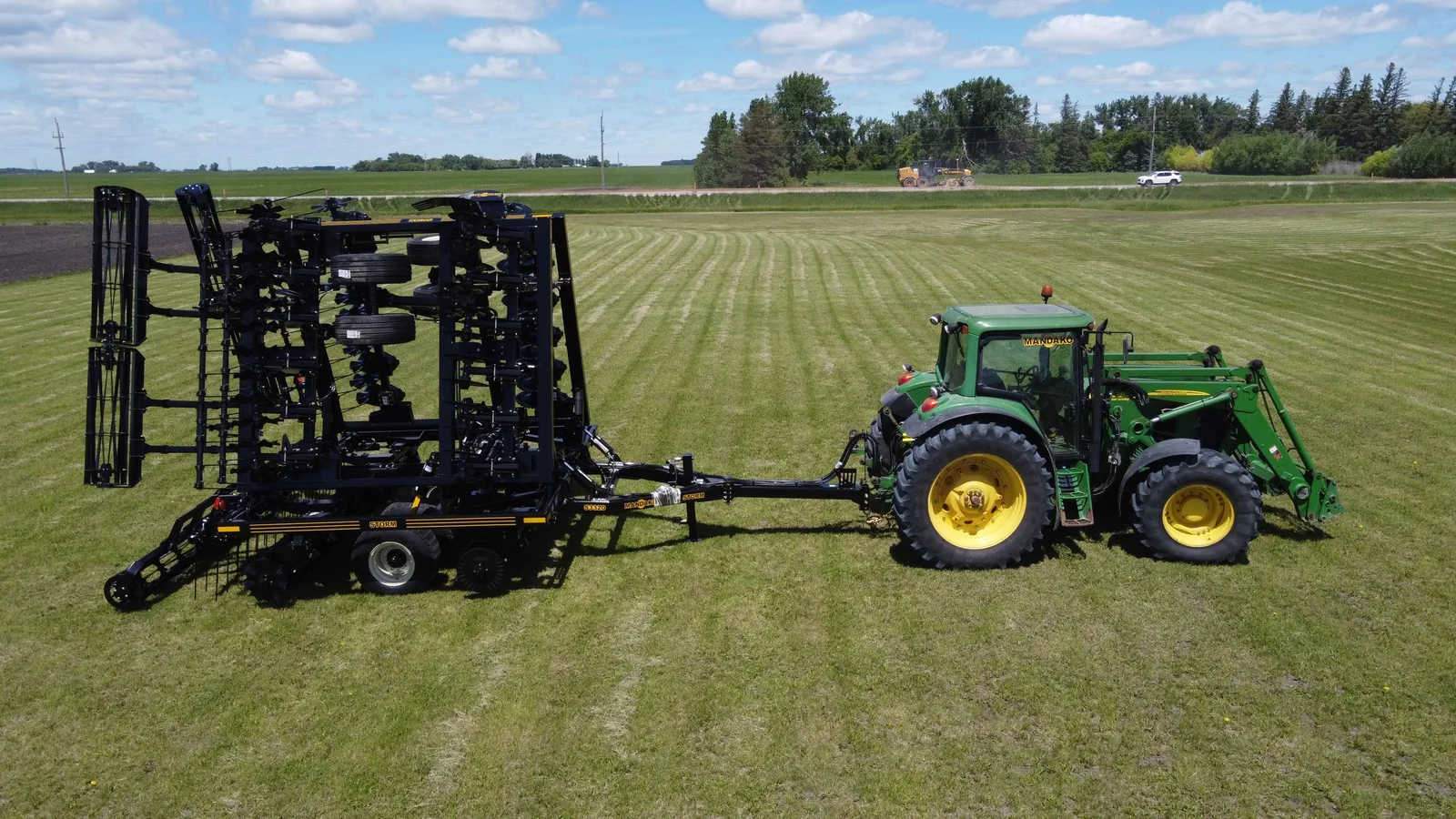
The Mandako STORM is our vertical tillage tool. It runs 20-inch coulter blades on 10-inch spacing, and the toolbar angle adjusts hydraulically from 0° to 14° while you drive. At 0° the coulters slice residue and leave the surface close to how they found it. Opened up toward 14° the blades move soil, mix residue and level ruts. Wet soil still compacts under any tool. In a wet spring, the flat setting is the one that lets the ground dry and warm without smearing once the soil is fit to work. For farms that need to travel narrow roads, the Mandako Euro STORM is a two-section version that fills ruts and handles heavy residue, including corn stalks and bean trash. Before the first pass, check that the soil is fit, and in a wet spring start with the toolbar at 0°.