Dealers
 Sales portal
October 23, 2026
Rock Rolling Strategy for Stony Prairie Fields Before Seeding
The frost heaves a field overnight and by morning you're looking at granite the size of basketballs sitting right where…
Read More →
You borrowed a neighbor’s roller for two seasons and it worked well enough. Now you’re ready to buy your own. The question is whether the machine you’re eyeing will actually match the tractor sitting in your shed, and whether it will handle the jobs you need done before freeze-up and again next spring. Getting that pairing wrong is an expensive mistake.
Most farmers shop for a roller by width first. That’s backwards. Your tractor’s horsepower, hydraulic capacity, and three-point hitch rating set the ceiling on what you can safely pull or mount. A wide, water-filled drum can be very heavy. If your tractor’s rear hitch is rated for less than the implement’s transport weight, you have a problem before you leave the yard.
Check your tractor’s operator manual for the Category II or Category III hitch rating and the hydraulic flow available. Then compare those numbers to the roller’s spec sheet. Width follows from there.
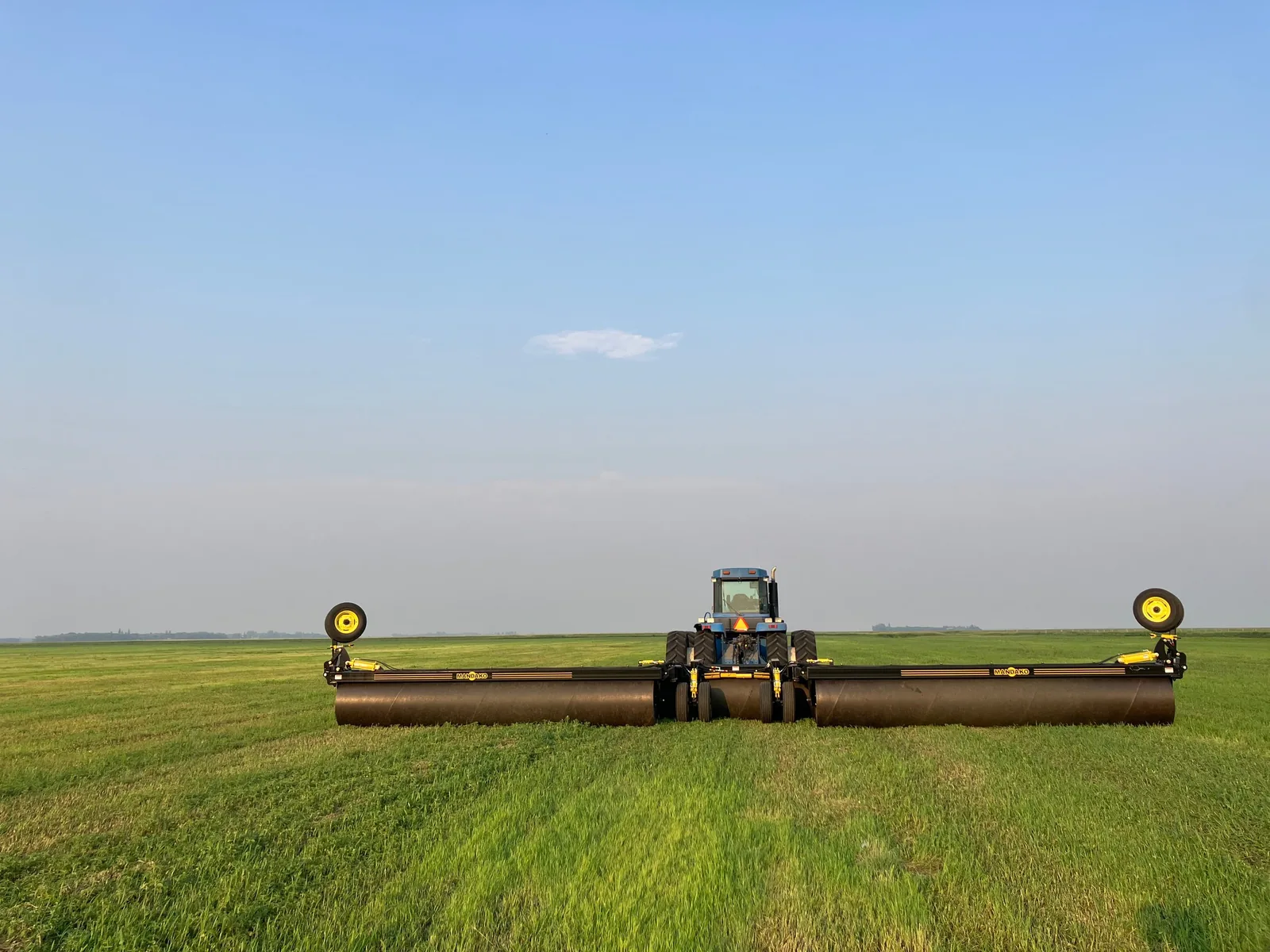
Think about your field sizes and shapes before settling on a width. Wider multi-section units fold for road transport and open to cover more acres per hour, but they need more horsepower to pull when filled and more hydraulic circuits to fold reliably. Narrow fields with lots of headland turning eat into the efficiency advantage of a wider machine.
On quarter-section blocks with long runs, a wider roller earns its keep. Match the width to how you actually farm, not to the largest field you have.

Rollers work by pressing the soil surface. How much weight you need depends on what you’re trying to accomplish.
Rocky ground needs enough weight to press stones below the combine header’s path. The goal is anchoring stones, not maximum pressure. According to Saskatchewan Pulse Growers, heavy pressure is not needed for small stones, and running a lighter or unballasted drum reduces compaction risk. Avoid rolling wet soil: it compacts and can seal the surface, raising root rot and soil-borne disease danger.
Most land rollers are filled with water to add weight. Some designs allow partial filling so you can tune the pressure to conditions. Know what your ground needs before you decide on drum diameter and fill capacity.
Rolling firms the seedbed surface and improves seed-to-soil contact. Spring is the main season on the Prairies, covering soybeans, field peas, lentils, canola and cereals either pre-emergence or within the crop’s safe post-emergence window. Fall rolling happens too, mainly for stone pressing, but it is secondary. The right ballast level differs between those two jobs, so factor in whether your roller can be partially drained and refilled easily.
Three-point hitch rollers are simple and give good depth control, but the weight bears on the tractor’s rear axle during transport. Drawbar-pulled rollers carry their own weight on their own wheels and are easier on the tractor’s drivetrain over long hauls between fields. For farms with significant road travel between parcels, a pull-type unit is usually the better call.
Folding multi-section rollers need to fit within your road transport width limit. Check provincial regulations before you buy. A machine that’s legal in Saskatchewan may require a pilot vehicle in a different province.
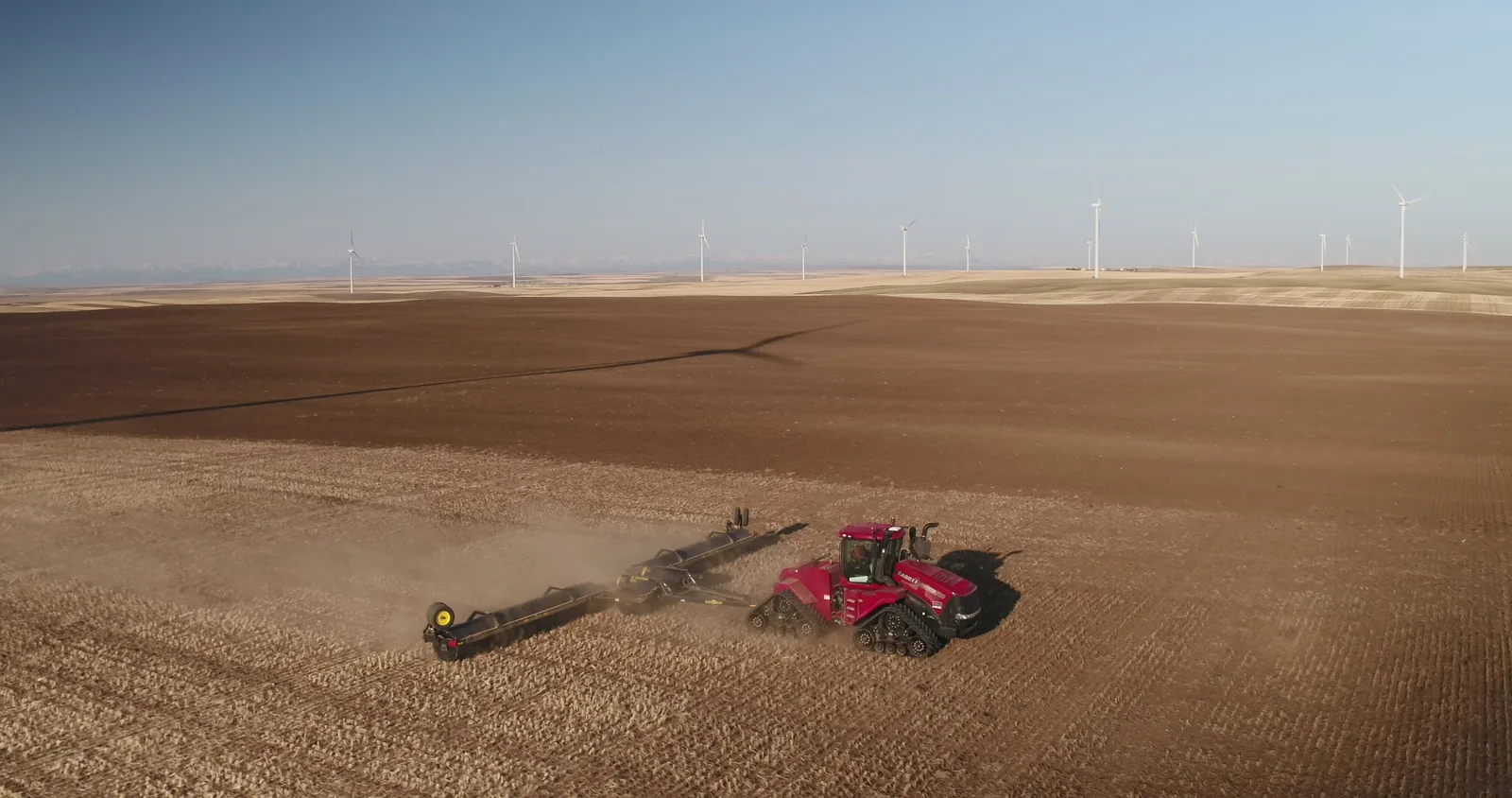
When your operation runs to several hundred acres or more, a single-section roller loses ground to a folding multi-section unit. The Mandako 3-Plex Landroller, built in Plum Coulee, Manitoba, folds to 11 ft 7 in. on all six widths and carries 465 to 530 lb per foot of width with the standard 42-inch drum. Any quality folding roller in this category should give you hydraulic fold, solid drum construction, and a hitch setup that suits your tractor’s drawbar. Shop with those criteria in mind and compare what’s available in your area.
Local dealers who stock prairie-built equipment tend to carry inventory that’s spec’d for Canadian field conditions and weights. Ask specifically about drum wall thickness, fill capacity, and what hitch category the machine is designed for. Thin-wall drums dent on rocky ground; that’s a short cut you’ll regret.
Ask about parts availability too. A roller is a simple machine, but seals, fill plugs, and hitch components do wear. If the dealer can’t get parts within a few days during seeding, that matters.
Auctions and private sales are another source, especially for used single-section rollers. Inspect the drum for flat spots, corrosion at the end caps, and worn or bent hitch hardware before you commit. A drum that wobbles even slightly will leave an uneven seedbed and stress your tractor’s hitch every pass.
Before you call a dealer or place a bid, pull your tractor’s manual, write down the three-point hitch category and hydraulic flow rating, and decide what width your field layout actually justifies. That short list will cut through most of the noise and point you to the right machine faster than any catalog will.
Meet our team at an upcoming event and get a hands-on look at Mandako's latest tillage solutions.
The frost heaves a field overnight and by morning you're looking at granite the size of basketballs sitting right where…
Read More →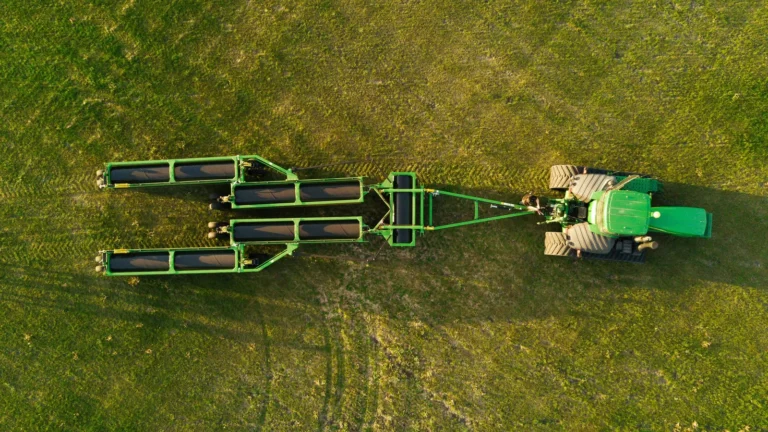
You've finished seeding that stony quarter and the clock is already ticking. The surface is rough, stones are sitting proud…
Read More →
The combine has rolled through, the grain cart is done its last run, and you're looking back at a field…
Read More →