Dealers
  Sales portal
 A disc chisel is a top-tier farming tool designed for deep tillage. It is essential for modern farming. This tool combines the soil-turning power of a chisel plow with the cutting action of disc blades. It effectively breaks up compacted soil and mixes crop residues.
The disc chisel has a front row of disc blades that cut through tough residues. Behind these are chisel shanks that penetrate deeply to loosen the soil.
Additionally, an integrated harrow ensures a smooth seedbed. The disc chisel is ideal for various tillage programs, especially in the fall. It enhances soil aeration and promotes better water infiltration. It also supports healthy root growth, making it a top choice for improving soil health and crop yields.
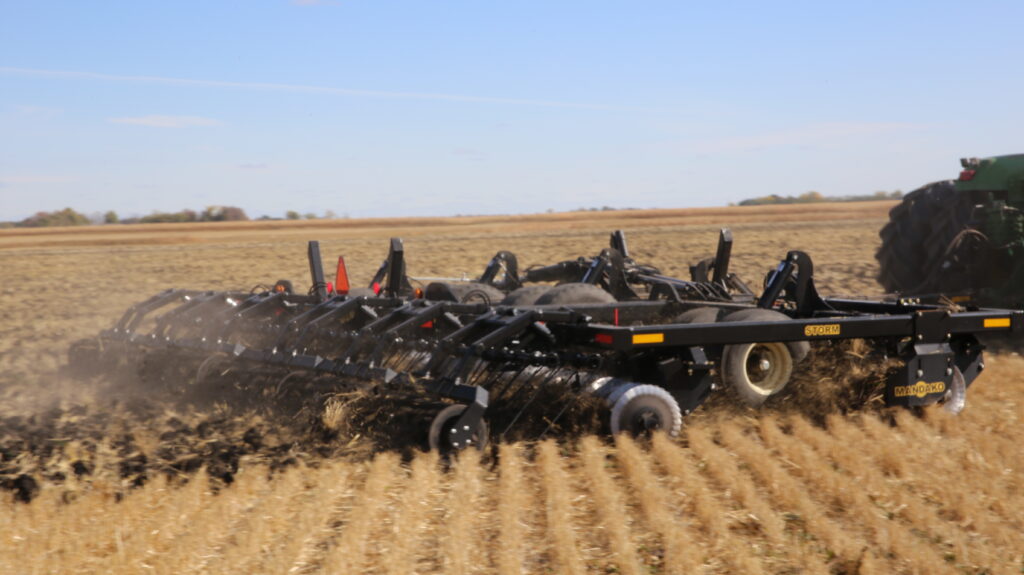
A typical disc chisel consists of heavy-duty discs mounted on a strong frame, followed by chisel shanks. The discs cut through crop residues and surface soil, allowing the chisel shanks to penetrate deeper, loosening and aerating the soil. This ensures minimal soil disturbance on the surface while breaking up hardpan and compacted layers below. This promotes better water infiltration and root growth.
Applications
Disc chisels work well in conservation tillage systems. Farmers use them to minimize soil disturbance, reduce erosion, and preserve soil structure. They also prepare fields for planting by improving soil tilth and reducing soil compaction.
Advantages
- Soil Compaction Reduction: Alleviates soil compaction, promoting healthier root systems and better water management.
- Residue Management: Incorporates crop residues into the soil, enhancing organic matter and soil fertility.
- Versatility: Useful in various soil types and conditions, making it a highly versatile tool.