Dealers
 Sales portal
Land leveling is the practice of pressing stones and root balls down, flattening ruts and lumps, and firming the soil surface across a field. On the Canadian Prairies it is done mainly with a land roller, and the primary payoff comes at harvest, not at seeding.
Why it matters on the Prairies
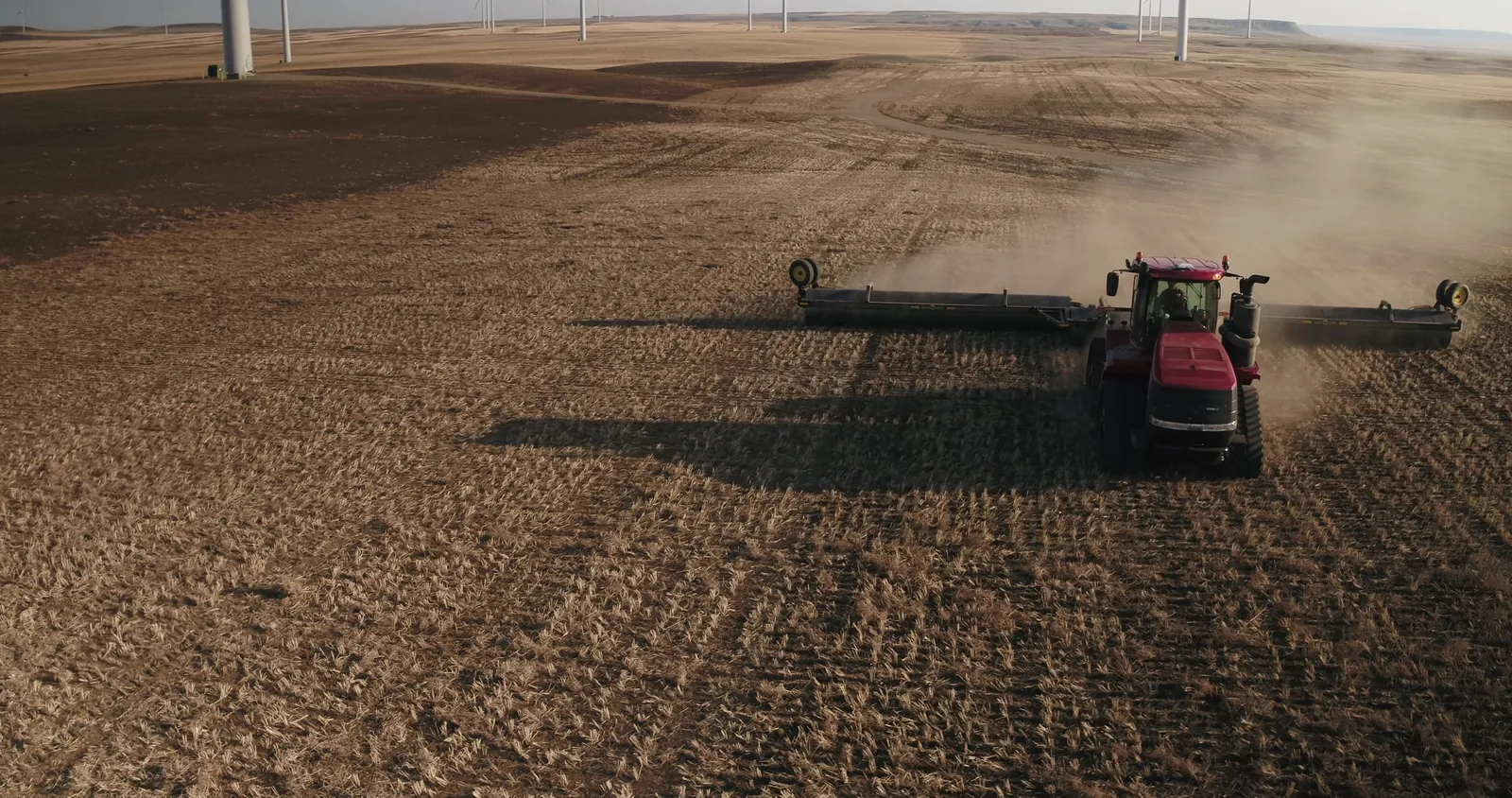
A rough, stony surface forces the combine header up. Stones that ride above the ground get picked up, and the cutting unit cannot run low enough to catch lodged plants. On pulse fields especially, that means missed pods and a slower harvest. Saskatchewan Pulse notes the specific benefits as a lower cutting height, better pickup of lodged plants and better overall harvest efficiency. Rolling also firms the surface, which improves seed-to-soil contact.
How producers handle it
Spring is the main season. Most producers roll soybeans, field peas, lentils, canola and cereals either right after seeding or within a narrow post-emergence window. Saskatchewan Pulse puts the safe rolling range for peas from pre-emergence up to about the fifth node, and for lentils from pre-emergence up to the five to seven node stage. For soybeans, Manitoba Pulse puts the safe post-emergence limit at VC to V1, while Saskatchewan Pulse, NDSU and SDSU place V3 as the upper limit.
For post-emergence passes, roll in the afternoon when plants are limp, not turgid. Manitoba Pulse recommends waiting for temperatures of about 25°C or warmer. Avoid wet soil, heavy rain in the forecast, and rolling within three to four days of a herbicide application. On dry, sandy soils, post-emergence rolling is preferred over pre-emergence to reduce wind erosion risk. Read more about seedbed preparation and the factors that decide whether to roll.
Equipment that fits
The Mandako 3-Plex Landroller is built in six widths from 30 to 50 feet, fits tractors from 120+ HP on the smallest, and runs a standard 42-inch drum with a 5/8-inch wall that delivers 465 to 530 lb per foot of width; every drum takes water when more weight is needed. For larger operations, the Mandako 5-Plex Landroller scales up to 85 feet across five sections with the same 42-inch cylinder diameter, while the Mandako 7-Plex Landroller reaches 112 feet and covers over 80 acres per hour at 6 mph. Match roller width to your tractor’s horsepower rating so the machine stays fully on the ground across its full span rather than running underloaded or overpowering the hitch.