Dealers
  Sales portal
 Green manure is a crop that is grown specifically to be terminated and incorporated into the soil, or left on the surface as a mulch, rather than harvested for sale. The decomposing plant material adds organic matter, feeds soil biology, and can supply meaningful nitrogen when legumes are used. Farmers have relied on the practice for centuries, and it remains one of the most cost-effective tools for rebuilding soil health between cash crops.
What Qualifies as a Green Manure Crop?
Almost any fast-growing species can serve as a green manure, but legumes are the most common choice because they fix atmospheric nitrogen through root nodules. Common options include field peas, hairy vetch, crimson clover, and fava beans. Brassicas and cereals are also used when the goal is biomass, weed suppression, or improved soil structure rather than nitrogen fixation. Many green manure crops overlap directly with what agronomists call cover crops. The distinction is mostly intent: a cover crop protects the soil, while a green manure is grown primarily to feed it.
Why Farmers Use Green Manure
The organic matter from a terminated green manure improves moisture retention, reduces soil erosion, and feeds the microbial communities that drive nutrient cycling. A legume stand at peak flowering can carry a significant nitrogen load, which becomes available to the following cash crop as residues break down. Green manures also play a role in crop rotation planning, breaking pest and disease cycles in a way that supports biological pest control. They fit naturally into both organic farming systems and conventional operations looking to cut fertilizer spend.
Termination and Incorporation
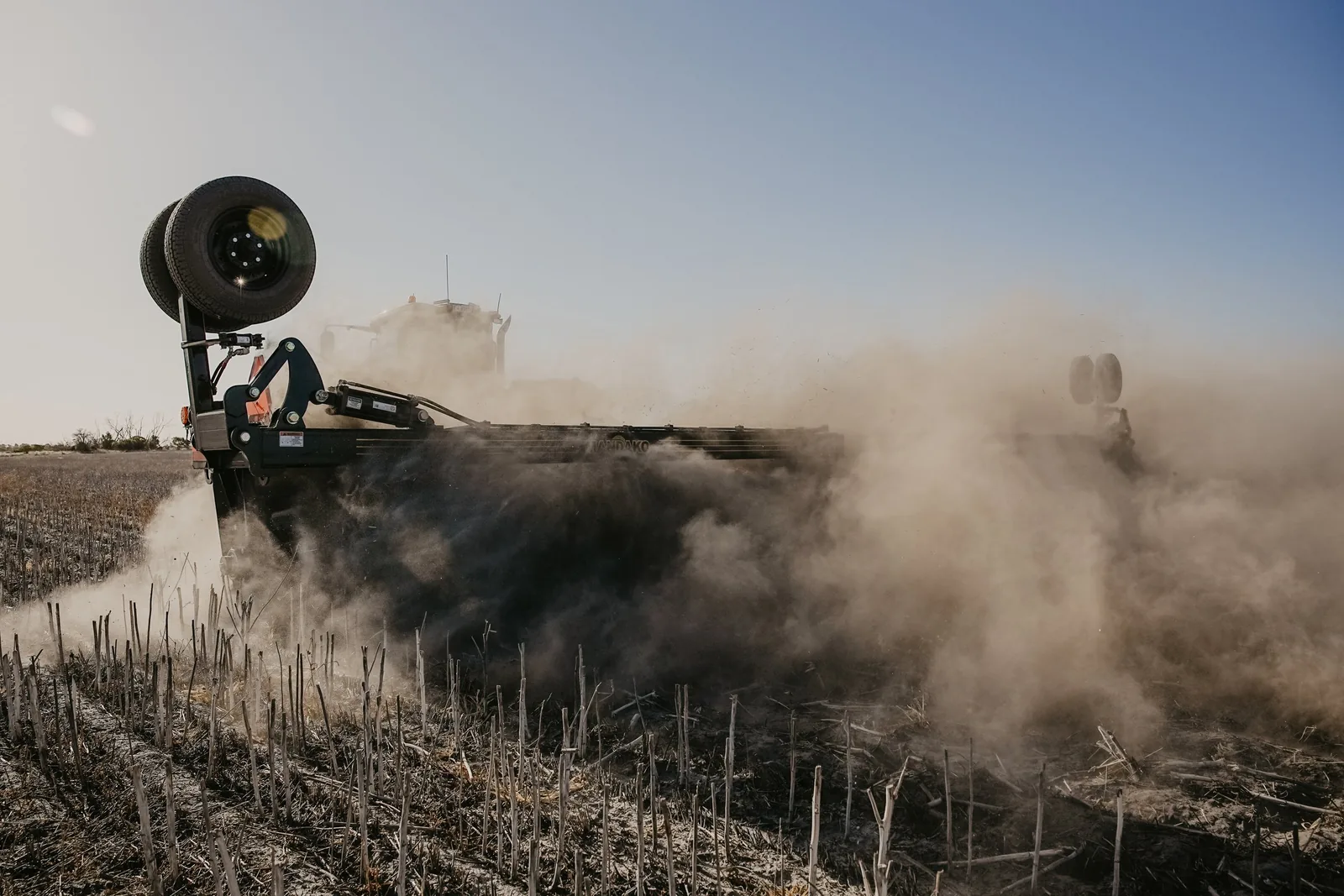
Timing termination correctly matters. Rolling or crimping at flowering kills the crop mechanically without tillage and leaves a flat mulch that protects the surface. If you need faster breakdown or are working a tighter rotation, shallow incorporation using reduced tillage speeds decomposition. Either way, give residues time to break down before drilling into them, since fresh green biomass can tie up nitrogen temporarily and affect seedbed preparation. Growers running no-till systems typically rely on rolling to terminate without disturbing the soil. Those practices also align well with broader sustainable farming practices.
Mandako Equipment for Green Manure Programs
The Cover Crop Crimper from Mandako is built to roll and terminate standing green manure crops cleanly, leaving residue flat without tillage. For operations that incorporate residues before planting, the Mandako Field Sergeant heavy harrow works the material into the seedbed efficiently. Both tools help you get the most out of a green manure program without unnecessary field passes.