Dealers
 Sales portal
Tillage equipment
Tillage equipment is any machine a farmer uses to mechanically work the soil before or after a crop, loosening it, managing residue, or breaking up compacted layers. The category ranges from light surface tools such as harrows and land rollers to heavy primary implements like chisel plows and disc harrows.
Why tillage choices matter on the Prairies
Prairie soils compact under repeated heavy equipment passes, and that compaction shows up as uneven emergence, shallow root development, and standing water in low spots. Producers in the Black and Dark Brown soil zones often see this after a wet harvest, when combines and grain carts run across ground that never had a chance to dry. A tool that reaches the compaction layer, fractures it, and leaves residue on top is what actually changes the profile.
Residue left on the surface holds topsoil over winter and keeps moisture in the ground come spring. Burying it trades that protection for a cleaner field, and on dryland acres that is a poor swap. This is why conservation tillage has grown across the region: the goal is to open the soil without inverting it.
How producers decide when and what to run
Most producers treating compaction make a fall pass with a chisel plow, then follow with a lighter harrow or disc pass before spring seeding. The timing matters. Working moist or wet soil with a chisel smears and compacts the profile instead of fracturing it, which makes the problem worse. Wait until the ground has dried enough to fracture cleanly before you run a chisel pass.
The working depth selected should match the problem. A chisel plow set shallow treats surface crust; set deeper, it breaks the layer where tractor tires have been packing year after year. Depth also matters for soil chemistry: deep work on Prairie soils can bring salts or carbonates toward the surface, so match the depth setting to actual field conditions.
Equipment that fits a Prairie tillage program
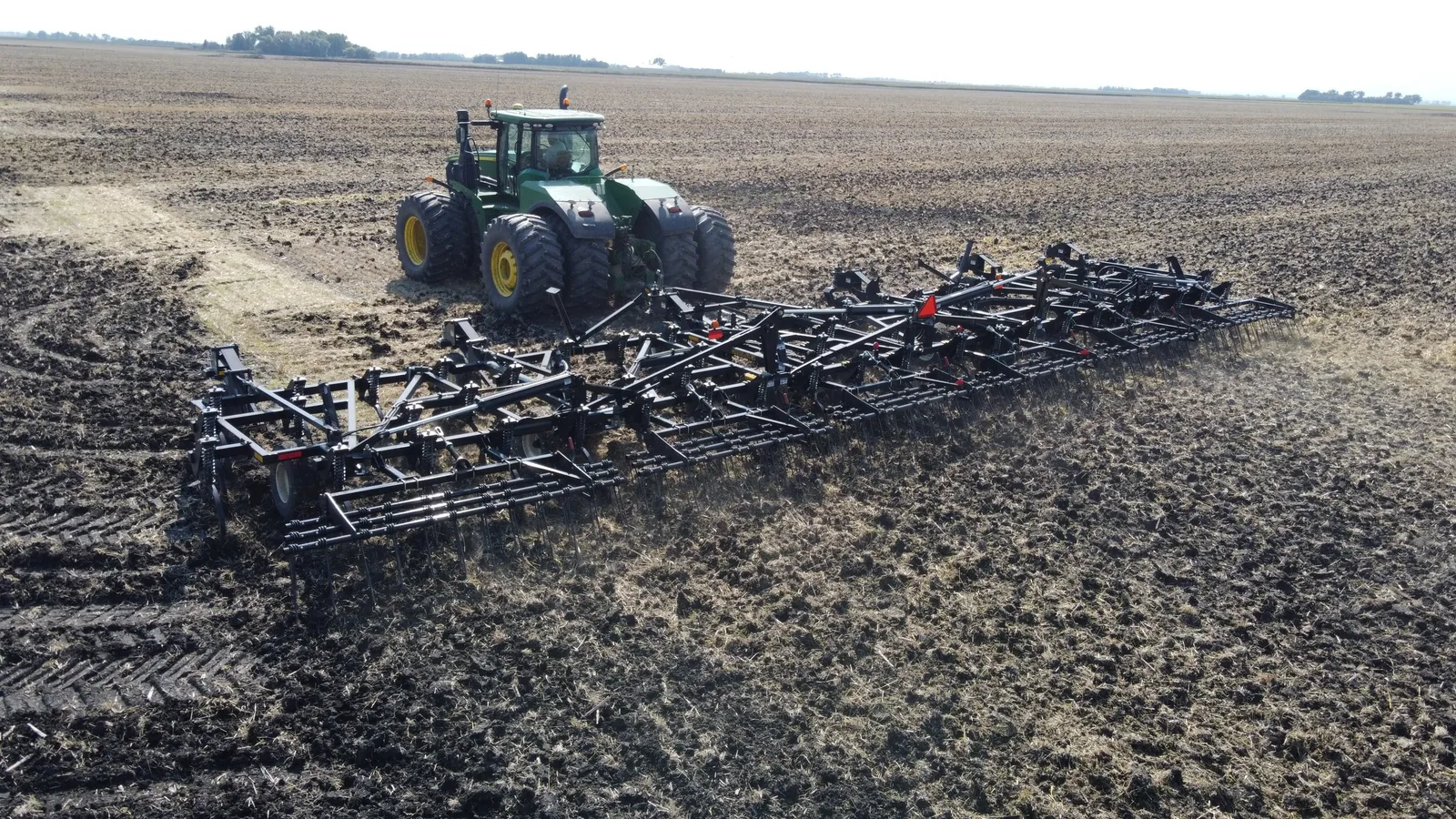
The Mandako Chisel Flex is built for primary tillage work across wide fields: 1-1/4″ thick by 2″ wide HD shanks at a 50° angle, each carrying an 800+ lb trip so a stone lifts one point while the rest stay in the ground. It works 1″ to 6″ deep, and the flex frame, with 7 pivots on the 40′ model and 11 on the wider units, lets every shank follow the contour and hold consistent depth across rolling ground. For fields that also need surface residue sized, the Mandako STORM handles vertical tillage without burying the trash. Add a tine harrow behind the shanks if the seedbed finish needs tightening up.