Dealers
  Sales portal
 Hardpan is a dense, compacted layer of soil sitting below the tillage zone that roots and water cannot easily penetrate. It forms through repeated equipment traffic, tillage at the same depth year after year, or natural cementation of clay and mineral particles.
What hardpan costs you in the field
On the Prairies, hardpan shows up quietly. A canola or pea crop looks uneven across the field, thin in some runs and fine in others, and the thin spots often track with old headland patterns or the lines where heavy equipment has passed the most. Roots hit the dense layer and flatten out sideways instead of driving down. In a dry spring in the Brown or Dark Brown soil zones, that shallow root system cannot reach subsoil moisture, and the crop stresses early. After a heavy rain, water pools above the hardpan because it has nowhere to drain, and seeds in wet, oxygen-starved soil germinate poorly. Soil compaction and hardpan are closely linked: compaction is the process, hardpan is what that process leaves behind when it goes uncorrected for several seasons.
How producers deal with hardpan
The standard fix is deep primary tillage using a chisel-style tool, timed for fall, after harvest and before freeze-up, when the soil has dried enough to fracture cleanly rather than smear. Smearing in wet conditions creates a glazed surface on the shank slot that can be as restrictive as the original layer. Working too shallow does nothing; the tool has to get below the compacted layer to lift and fracture it. A chisel plow with shanks on 12” spacing runs 1” to 6” deep and fractures the soil just under that depth, so set it to reach under where the pan starts. Deep-rooted cover crops, including radishes and turnips, can help in lighter situations, but a well-established hardpan usually needs mechanical intervention first. Rotating tillage depth from year to year is the most practical prevention, so the same layer never takes repeated hits at the same point.
Equipment that fits this job
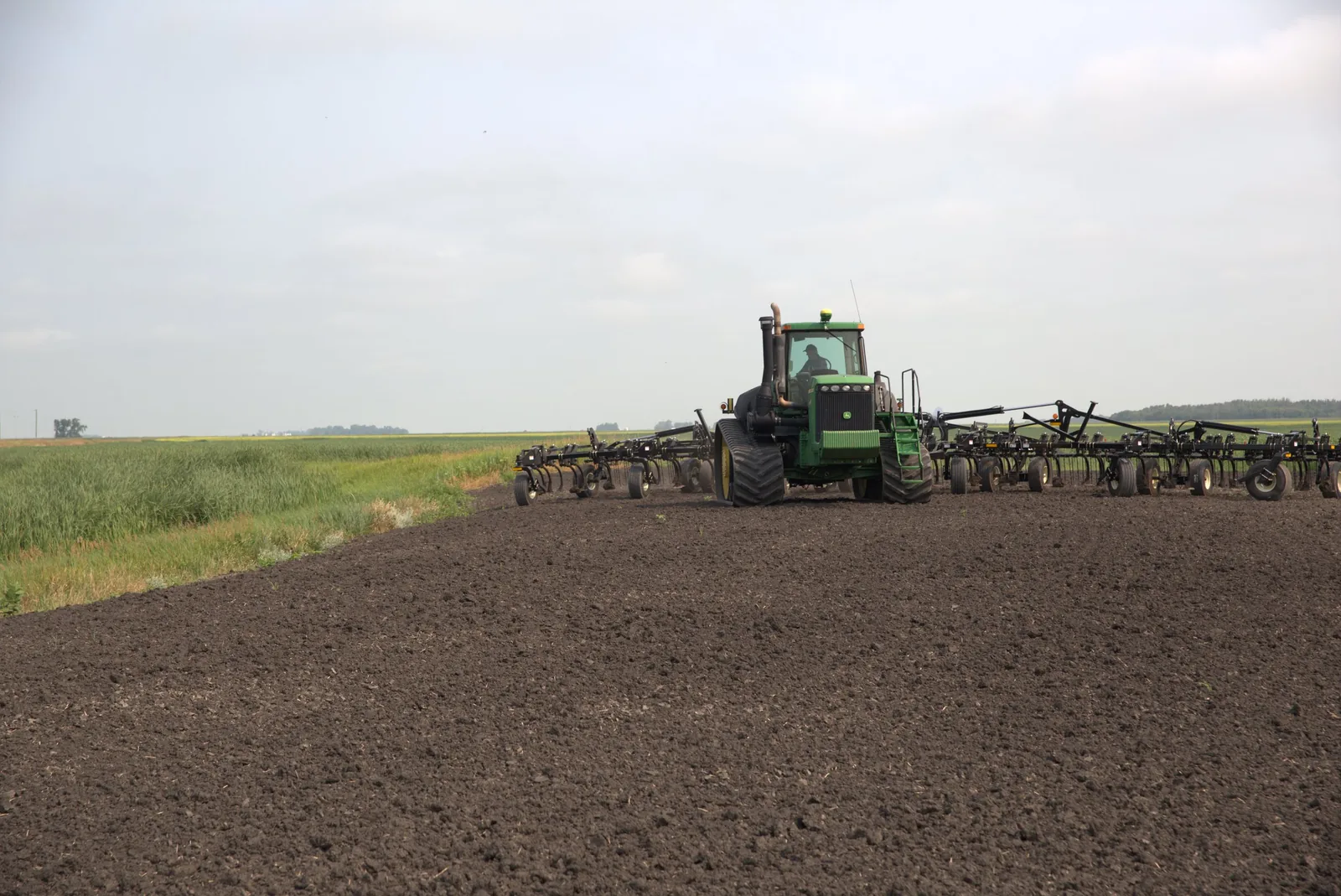
The Mandako Chisel Flex is built for this work. Its HD shanks fracture the compacted layer while each shank carries a high-trip-force release so a buried rock lifts one point while the rest stay in the ground and keep working. The tines lift the soil without inverting it, keeping surface cover in place to protect topsoil and hold spring moisture. It suits operations of most sizes on the Prairies. Once the hardpan is broken, rotating to a shallower pass in subsequent seasons keeps the layer from re-forming without repeating a full deep run every year.