Dealers
  Sales portal
 A disc harrow is a tillage implement that uses rows of round, sharpened steel disc blades mounted on gangs to cut through crop residues, break up clods, and mix the top layer of soil. The blades run at an angle to the direction of travel, which creates the cutting and turning action. Disc harrows are used primarily for primary or secondary tillage, working fields after harvest or ahead of planting to support seedbed preparation.
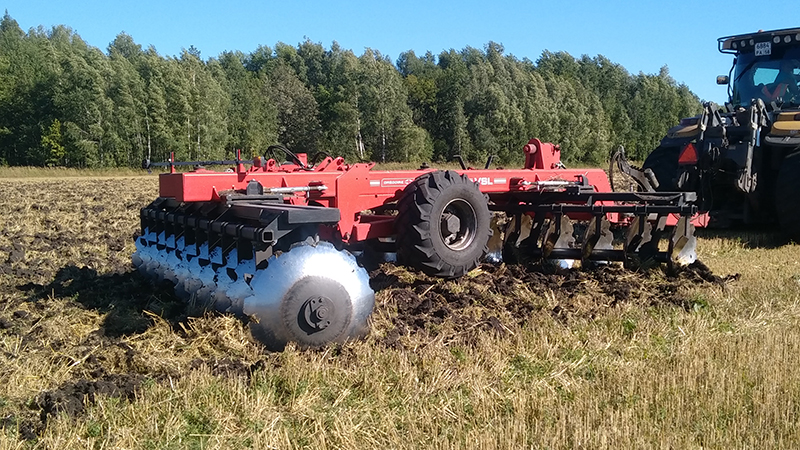
Disc harrow cutting through crop residue in a harvested grain field
How a Disc Harrow Works
Each gang holds multiple concave disc blades. As the implement moves forward, the angled blades slice into the soil, lift it slightly, and roll it to the side. That action chops residue, loosens compacted surface layers, and incorporates organic matter into the top few inches of soil. Blade diameter, concavity, and gang angle all influence working depth and aggressiveness. Heavier soils or dense residue call for more aggressive blade angles; lighter soils need less.
Because the blades work horizontally through the soil profile, disc harrowing can affect soil structure if done repeatedly under wet conditions. It can also create a hard pan over time. Rotating it with deeper tools or vertical tillage helps avoid that problem.
Where It Fits Your Tillage Program
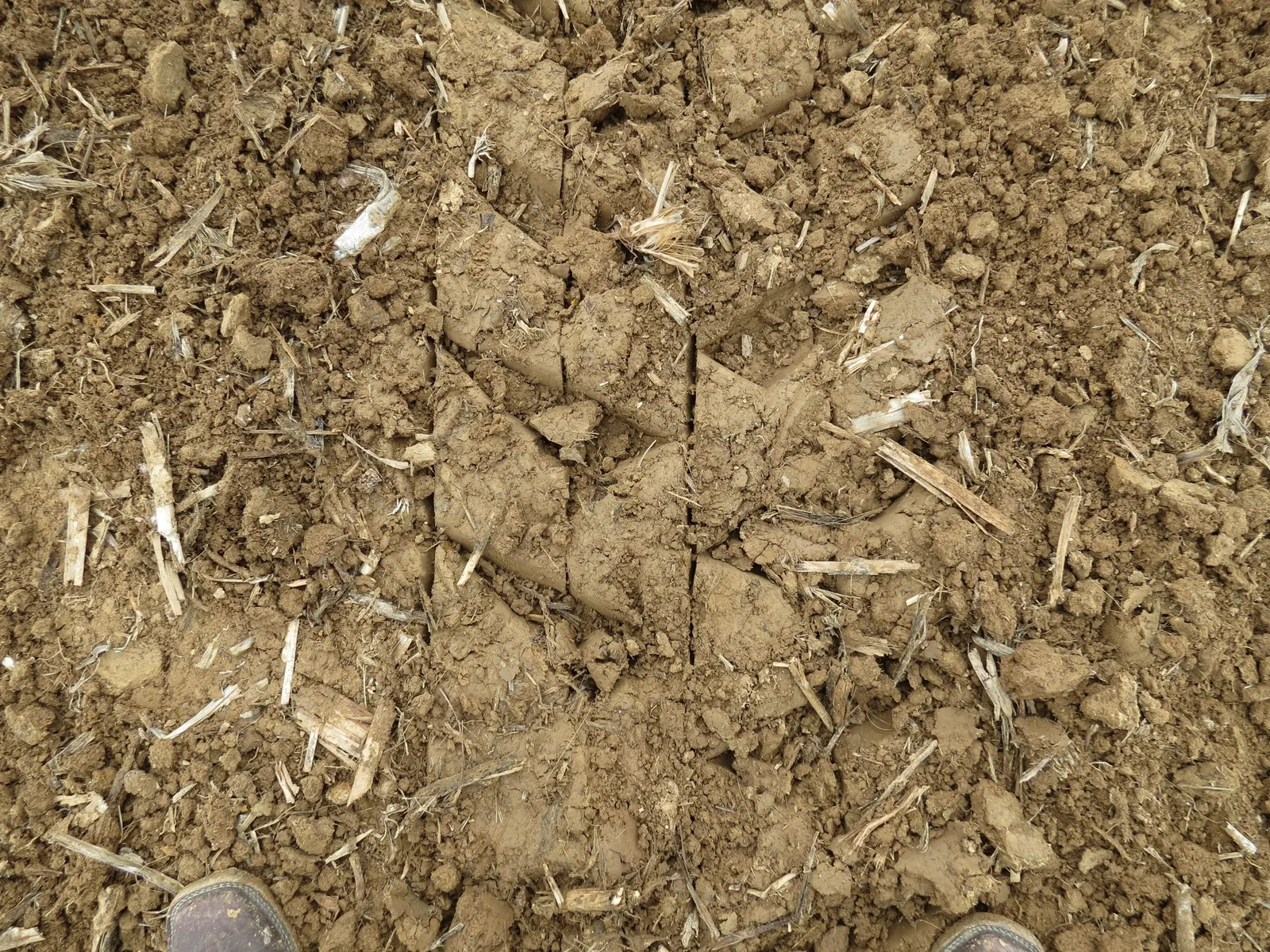
Disc harrowing is common in conventional and reduced tillage systems. After a heavy crop like corn or sunflowers, a disc harrow knocks down stalks and starts residue breakdown before winter. In spring, a lighter pass can level the field and firm the surface to improve moisture retention and support better germination rates. It also works well ahead of or after cover crops to incorporate biomass quickly.
Operators moving toward vertical tillage sometimes use a disc harrow for a transitional pass, especially in fields with deep residue mats, before switching to lower-disturbance tools long term. Watch soil compaction and soil erosion risk when scheduling passes, particularly on slopes or in dry conditions.
Mandako Equipment for Residue and Tillage Work
Mandako builds tools for operators managing residue and tillage efficiency. The Mandako Storm and Mandako Euro Storm are vertical tillage machines that cut and size residue with minimal soil disturbance, a strong complement or alternative to traditional disc harrowing. For post-harvest leveling and residue sizing with a finishing pass, the Mandako Field Sergeant heavy harrow handles tough conditions across a wide range of soils. See the full Mandako AgriPedia for more tillage and soil management terms.