Dealers
  Sales portal
 Crop residue management is the set of practices a producer uses to handle the straw, stalks, chaff and root material left in a field after harvest. The goal is to keep those remains from interfering with the next crop while protecting the soil surface and cycling nutrients back into the ground.
Why residue management matters on the Prairies

Heavy residue left unmanaged causes real problems at seeding time. Thick, uncut straw plugs openers, creates uneven seed placement and leaves cold, wet pockets where germination stalls. In Black soil zone fields after a heavy canola or cereal crop, mat-like residue can shade the seedbed long enough to push seeding dates back by several days. In drier Brown and Dark Brown zones, producers often want residue standing or spread evenly to hold moisture through the winter and into spring. Either way, how you handle crop residues in the fall or early spring sets the table for everything that follows.
How producers handle crop residue
Timing and soil conditions determine the approach. Many Prairie producers make a residue pass in the fall, right after combining, while the ground is still firm enough to carry equipment. Others wait for early spring to dry and warm a wet seedbed before the drill goes in.
The key decisions are cutting depth, how much soil disturbance is acceptable, and whether the goal is to chop and mix or simply slice and leave the surface close to intact. Wet, cold spring conditions call for minimal disruption so the top few inches can dry down. Vertical tillage has become the common middle ground: it sizes residue and opens the surface without the deep inversion of a plow, keeping organic matter near the top and limiting compaction risk. For corn or sunflower stalks that need crushing before any tillage pass, a stalk-crushing implement handles that first step so the coulters are not fighting whole standing material.
Equipment that fits
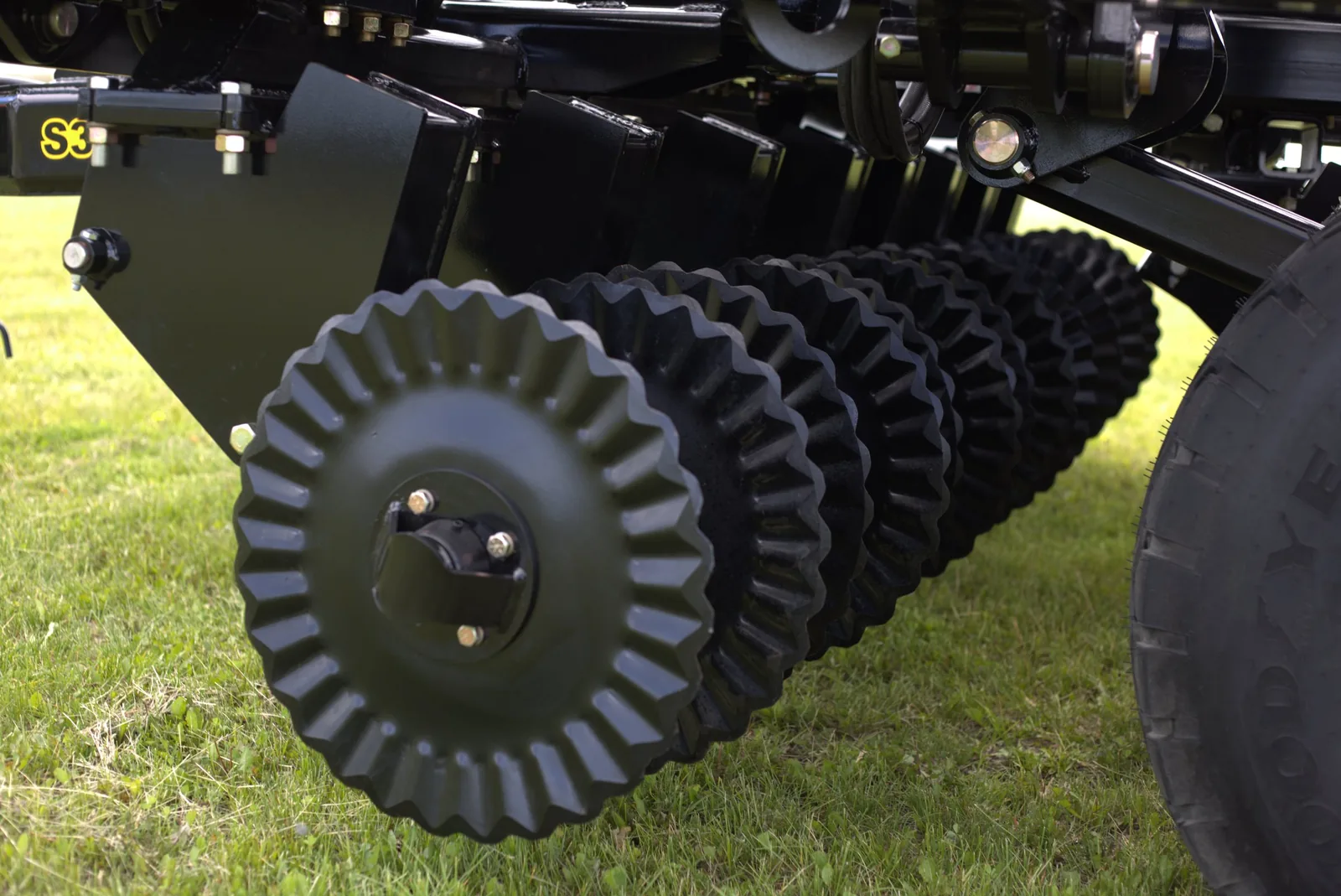
The Mandako STORM is built specifically for this job. It runs 20-inch coulter blades, and working depth is set at a single point for the whole machine, from 1 to 6 inches. Set it flat for a wet spring when you want to slice residue without smearing the soil, or open the toolbar angle for fall mixing and leveling after a heavy crop. Where stalks need crushing first, the Mandako Stubble Cruncher handles that pass before the STORM goes through. Match your blade type to field conditions before you go, and the pass will do more useful work.