Dealers
 Sales portal
What Is a Roller Crimper?
A roller crimper is a heavy cylindrical roller fitted with blunt, chevron-patterned blades that crushes and crimps standing cover crops to the ground without cutting or uprooting them. The blades bruise the plant stems at regular intervals, interrupting the flow of water and nutrients and killing the crop. The result is a thick, flat mat of crop residue lying on the soil surface. No herbicide is required, and the soil stays undisturbed.
How a Roller Crimper Works
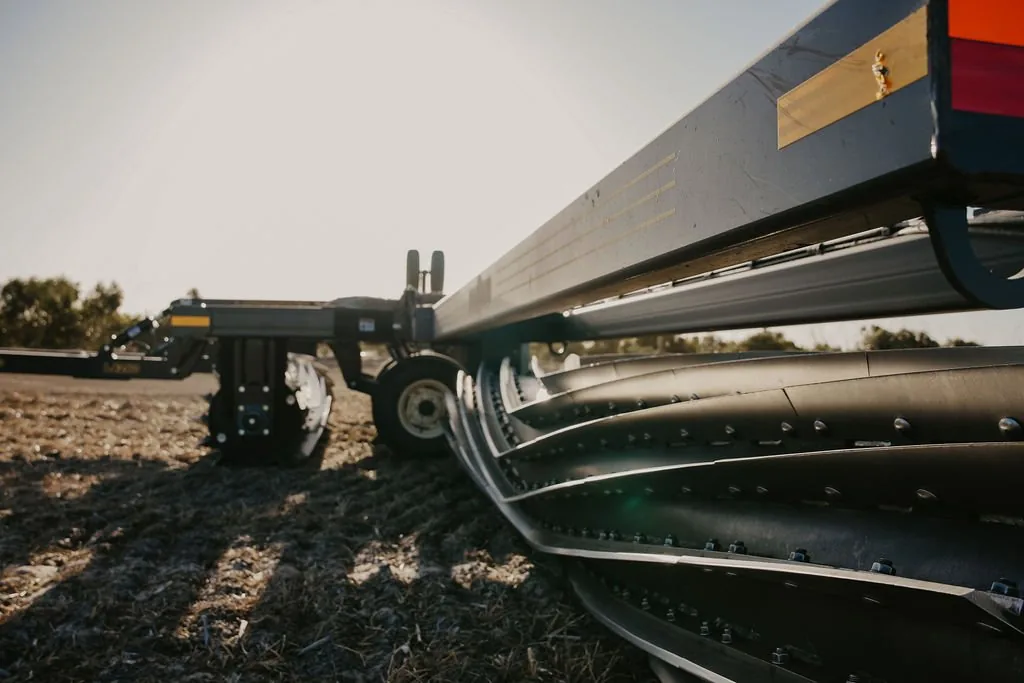
The roller relies on weight and blade geometry, not cutting edges. As it passes over the standing cover crop, the chevron blades press into each stem at an angle, crimping rather than slicing. The plant collapses forward in the direction of travel. Timing matters. Most cover crop species must be at or near anthesis (flowering) for crimping to achieve reliable termination. Crimping too early, before the plant reaches that stage, often results in regrowth. Crimping cereal rye at heading and terminating legumes like hairy vetch at early pod-set are common benchmarks.
Why Farmers Use One

The residue mat does several things at once. It suppresses weed pressure, which supports biological pest control and reduces herbicide load. It protects soil health by shielding the surface from raindrop impact and reducing soil erosion. Decomposing slowly over the season, the mat also improves moisture retention in dry stretches. For producers in organic farming systems, where synthetic termination is not an option, a roller crimper is often the most practical tool for managing a cover crop stand ahead of cash crop planting.
Roller crimping pairs directly with no-till farming. A planter or drill follows behind, pushing through the mat to place seed. Good seed-to-soil contact is critical here, so the planter setup needs to handle residue without hairpinning or bridging. Rolling and planting in a single pass is common practice and cuts down on field traffic, consistent with sustainable farming practices.
Mandako Equipment
The Mandako Cover Crop Crimper is built for producers running cover crop programs in no-till and reduced-till systems. It is designed to lay down a uniform residue mat in a single pass, sized to match common row-crop planter widths for efficient field operations.