Dealers
  Sales portal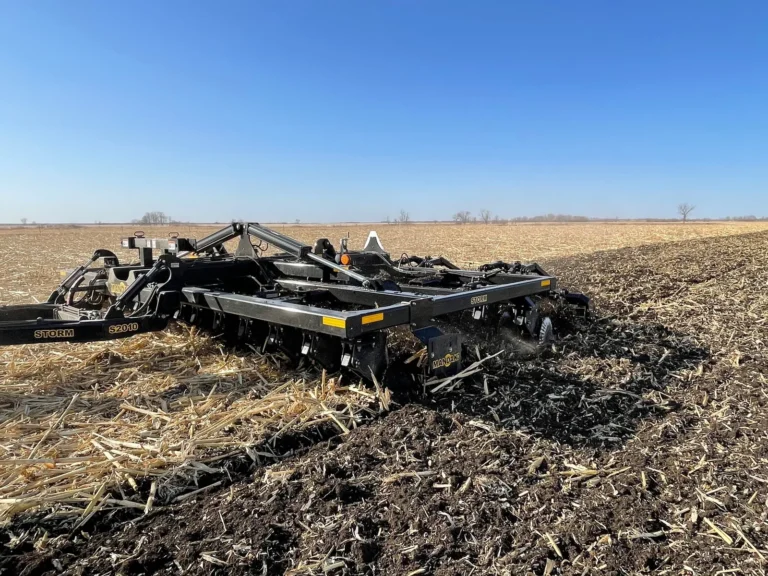
Getting Corn Residue Right Before the Snow Falls
The combine has rolled through, the grain cart is done its last run, and you're looking back at a field…
Read More →
Combining a cereal crop is satisfying, but what you do with that field in the days and weeks that follow can shape your soil health for years. Cereal harvest opens one of the best windows in the farming calendar for organic amendments, cover crop establishment, and residue management. Miss it, and you’re playing catch-up all the way to next spring.
Cereal crops are typically off the field earlier than canola or soybeans in most prairie rotations. That extra time matters. Soil temperatures are still warm enough to support biological activity, and you have days or even weeks before freeze-up to let amendments and cover crop roots start doing their work.
Crop rotation with cereals also tends to leave fields with lower disease and weed pressure, which gives cover crops a cleaner start. That matters if you’re trying to build biology without fighting a mess of survivors from the previous cash crop.
Organic amendments broadly fall into a few camps: livestock manure, compost, biosolids, and crop-derived materials like green manures or incorporated cover crops. Each carries a different nutrient profile, carbon-to-nitrogen ratio, and release timing. Knowing which one fits your rotation takes more thought than just spreading what’s available.
Manure applied after cereal harvest has time to begin breaking down before the ground freezes. Incorporation helps reduce nitrogen volatilization and cuts the risk of runoff. Compost is more stable, releases nutrients slowly, and does a better job building long-term soil health and soil structure than raw manure, though it typically supplies less immediately available nitrogen.
Cover crops are increasingly used as the amendment themselves. A cereal rye or mixed brassica blend seeded right after combining adds organic matter, scavenges residual nitrogen, and protects bare ground through fall and into spring. The trade-off is timing: you need seed in the ground quickly, before soil temperatures drop and days shorten.
Some farmers aerial seed into standing cereals just before harvest. Others seed immediately after combining. Either way, a firm seedbed makes a real difference to germination rates. Loose, cloddy ground or heavy uneven residue will cost you establishment.
Before any amendment goes on or any cover crop seed goes in, you need to deal with crop residue. Thick, uneven straw mats create cold spots, harbor disease, and block seed-to-soil contact. A combine that spreads well is a start, but it’s rarely enough on its own.
Vertical tillage run right after harvest sizes and distributes residue without inverting the soil profile. It speeds breakdown, levels the field, and creates a consistent surface that seeding equipment can handle. A land roller used after vertical tillage firms the seedbed and pushes residue flat, improving seed-to-soil contact for any cover crop you follow up with.
Any vertical tillage tool can do this job. If you want one built for Prairie conditions and heavy cereal straw, the Mandako STORM is worth a look, but the principle is the same regardless of brand: get that residue sized and incorporated before conditions close in.
Here’s a practical order of operations for a post-cereal organic amendment program:
You don’t always get all five steps done. A wet fall, a tight labour window, or delayed harvest can compress the plan. Prioritize residue management first. Even if you skip the amendment this year, a clean, firm seedbed puts you ahead for spring.
Organic matter doesn’t build in one application. It builds over years of consistent inputs, reduced tillage where appropriate, and rotations that include crops like cereals that leave behind high-carbon residue. Each post-harvest window is a deposit. Skip enough of them and the account runs low.
Cereal harvest gives you time and a workable field. Use both. The soil will show it in yield and structure long after this crop is sold.
Meet our team at an upcoming event and get a hands-on look at Mandako's latest tillage solutions.
The combine has rolled through, the grain cart is done its last run, and you're looking back at a field…
Read More →
The combine is parked, the bins are full, and yields came in better than most growers expected after a wet,…
Read More →
Ask any producer farming near Shaunavon, Saskatchewan, or across the driest stretches of the Northern Great Plains, and they'll tell…
Read More →