Dealers
 Sales portal
What Do Germination Rates Mean?
Germination rate refers to the percentage of seeds that successfully sprout within a given timeframe. To calculate this, divide the number of seeds that germinate by the total number of seeds sown, then multiply by 100. For instance, if 8 out of 10 seeds sprout, the germination rate is 80%.
Key Factors Affecting Germination
Several factors influence germination rates:
- Seed Age: Older seeds typically have lower germination rates.
- Storage Conditions: Seeds exposed to moisture, warmth, or light may lose viability.
- Seed Preparation: Techniques like cold stratification, scarification, and pre-soaking can enhance germination, especially for certain perennial and legume seeds.
Enhancing Germination Rates
To improve germination rates, ensure seeds have consistent moisture, adequate oxygen, proper soil temperature, appropriate light exposure, and correct planting depth. For instance, most vegetable seeds thrive in soil temperatures between 70℉ and 80℉. Some seeds, like wildflowers, require light for germination and should not be buried too deep.
Determining Germination Rates at Home
You can easily test germination rates at home using the paper towel method:
- Moisten paper towels and place seeds on one side.
- Fold the towels to cover the seeds and place them in an unsealed Ziploc bag.
- Keep the bag in a warm, sunny spot, adding water as needed.
- After the recommended germination period, count the sprouted seeds and calculate the rate.
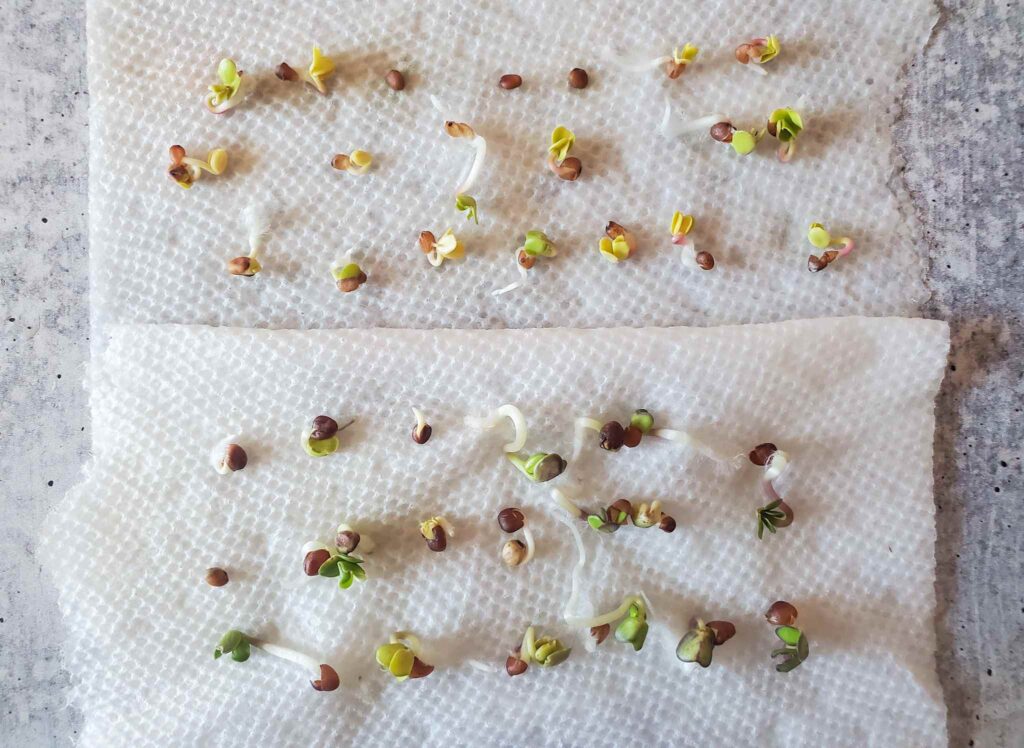
For a more detailed guide, please refer to the comprehensive instructions found here. This document from the University of Arkansas Cooperative Extension Service offers in-depth information on seed germination, including best practices for soil preparation, moisture management, and specific techniques to enhance seed viability and germination rates.
Increasing Germination Rates on Farmlands
To enhance germination rates on farmlands, consider the following detailed steps:
Soil Preparation
- Tilling: Create a fine, firm seedbed by tilling the soil to reduce compaction and enhance seed-to-soil contact. The Mandako Storm is particularly effective for this purpose, as it aerates the soil using various types of disks, ensuring optimal soil conditions.
Seed Quality and Storage
- High-Quality Seeds: Use fresh seeds stored in cool, dry conditions to maintain viability. Avoid using old or poorly stored seeds which may have reduced germination rates.
Seed Treatment
- Cold Stratification: Mimic natural winter conditions to break seed dormancy, particularly useful for perennial seeds.
- Scarification: Mechanically or chemically treat seeds with hard coats to enhance water absorption and germination.
Irrigation
- Consistent Moisture: Ensure seeds receive consistent irrigation to maintain the moisture levels necessary for germination. Avoid over-watering or allowing the soil to dry out completely.
Planting Techniques
- Precision Planting: Utilize precise planting equipment such as seed drills and land rollers to place seeds at the correct depth and ensure uniform soil coverage. This prevents seeds from being too shallow or too deep, both of which can hinder germination.